

Abridge’s big announcement

Ruth’s reporter’s notebook: Abridge is moving beyond scribing with several big announcements this week. The announcements—collaborations with Eli Lilly, NVIDIA, and Northwestern University—point to how the company plans to be an AI company of the future.
Last summer, Epic announced it was launching its own ambient scribe and ending partnerships with Abridge and other outside scribes. At the time, there was a lot of media swirl around what this would do to Abridge’s business, since more than 40% of hospitals are wedded to Epic, its integrations, and often its products.
But Abridge CEO Shiv Rao seems to have a plan. The keystone of it is a partnership with chipmaker Nvidia to build healthcare-focused artificial intelligence. As you’ll see in our conversation below, one of the major reasons for the partnership is so that Abridge can own more of its stack and be less dependent on other companies for success.
Things to consider: Two health executives told me that Abridge is moving faster than Epic, and it’s obvious the company is hungry and willing to work with them to develop interesting new tools. For example, one said that Abridge was willing to develop scribing for nurses, which has been hard to get elsewhere on the market. And Abridge, for all its hunger, is willing to pay attention to health systems that don’t feel prioritized by Epic, according to Craig Norquist, CMIO at HonorHealth, a medium-sized health system in Arizona.
However, they’re still watching Epic to see what it delivers and are willing to shift products if and when Epic brings forward its own ambient scribe. And one said, they’re cognizant of the fact that all of the intelligence that Abridge is delivering won’t be deeply integrated with Epic. That will be a hurdle for its adoption.
Also worth noting: A big study just came out in Nature to evaluate two clinical AI tools, Open Evidence and UptoDate Expert AI, against the frontier models. The findings? General-purpose large language models from companies like OpenAI, Anthropic and Google perform better based on medical benchmarks.
Expansion: Still, Abridge is moving beyond hospitals. It is now working with payers Cigna and Aetna on value-based care arrangements and real-time payments for providers, respectively. The company also inked a deal with pharmaceutical company Eli Lilly, in which Lilly has taken a stake in Abridge.
Bottomline: Abridge faces headwinds, but the company is staying nimble.
NEWS
CMS creates Office of Health Technology and Products
The Centers for Medicare and Medicaid Services has created a new office for health technology that will focus on driving interoperability—typically a task for the Office of the National Coordinator. Last year, when President Trump took office, there was a lot of discussion about whether CMS, which could use reimbursement as a carrot for stoking interoperability, would absorb ONC. Instead, this new office seems to be how CMS will lead on interoperability. As a founding director of ONC, Jodi Daniel points out, with 8 divisions and 100 responsibilities, this office “shows a significant shift in expectations and responsibilities!”
House voted to strike down WISeR pilot
The House Appropriations Committee voted unanimously to strike down the controversial WISeR pilot, which added AI-backed prior authorization for Medicare services. “The committee believes that any proposal to impose prior authorization requirements in traditional Medicare should be subject to robust congressional oversight and transparent evaluation of impacts on beneficiary access to care, provider burden, and program costs,” read the amendment voted by the committee.
Employers won’t pay for weight loss much longer
More than a quarter of large employers say they are adding criteria this year or next for weight loss drug coverage, while 11% have dropped or are planning to drop coverage for weight-loss purposes altogether, according to soon-to-be released data from benefits-advisory firm Mercer. Currently, around 45% of plans don’t offer coverage for GLP-1.
Wearable data enters the clinic
Wearables are ubiquitous, and they are generating a wealth of data that, until recently, had no clear medical application. That’s about to change: Oura and Whoop recently announced it would make it possible for users to contact doctors directly from their apps, sharing the metrics they had collected. Mario Aguilar at STAT breaks down the challenges and opportunities behind this trove of data entering the doctor’s office (or, rather, the doctor entering the trove of data).
Reserve Your Spot for Upcoming Webinars!
DEALS & LAUNCHES
- Surgical AI startup Uncovr announced a $7 million seed round, led by Index Ventures.
- CereVasc closed an oversubscribed $85 million Series C led by Piper Sandler Merchant Banking. The funding will advance eShunt, a system for the treatment of normal pressure hydrocephalus.
- Nourished’s parent company, UK-based Rem3dy Health, raised €16 million ($18.5 million) in a Series B round led by Suntory to fuel its international expansion.
- Medicare Advance plan Essence Healthcare is expanding its partnership with Oura to identify the risk of sleep apnea.
- Longevity startup NewLimit closed a $435 million Series C round led by Founders Fund. The funding was collected ahead of the launch of the company’s first clinical trial of a liver medicine.
- Stepful, an AI-powered healthcare talent pipeline, secured $55 million in Series C funding led by Oak HC/FT to scale its platform. The company currently works with more than 35 major health systems and has graduated over 32,000 practice-ready healthcare workers since its founding.
- Lassie, which is building autonomous systems to run small businesses, raised $35 million in Series A financing led by Andreessen Horowitz. This brings the startup’s total capital raised to $47 million. Doctors’ offices are some of the most common types of small businesses and rank among the biggest by employment and payroll.
- Melinda French Gates announced $215 million in additional funding to Pivotal to focus on women's reproductive and midlife health. This brings her total investment in women's health to $600 million over the past two years.
- HingeHealth adds orthopedic surgery to HingeSelect, which now delivers services across the entire musculoskeletal health spectrum.
LIFERS THIS WEEK!
This week on Lifers, Christina Farr spoke with Dr. David Carmouche, chief medical and chief commercial officer at Lumeris, about how AI could stoke a re-imagining of primary care. Carmouche was recently appointed as an advisor to the Department of Health and Human Services as well as the Center for Medicare and Medicaid Services. Together, they discuss how decades of administrative burden, misaligned payment models, and the erosion of the longitudinal doctor-patient relationship turned primary care into an impossible job. In the episode, Carmouche explains how AI could help a single PCP manage 5,000 to 10,000 patients.
Four Questions with Abridge CEO Shiv Rao
Second Opinion: Why do a big glossy announcement like this?
Shiv Rao: I think what is important is to demonstrate what I think folks increasingly understand, is that it's one thing to do a note, it's another thing to think about this more holistically, and we're thinking about the bigger picture, and that hopefully will resonate with a lot of the market. There is a moment right now in time where KLAS, for example, they used to call it an AI scribe, and then they called it ambient, and now it sounds like they might just call it AI.
I think that's the evolution that more of the industry is figuring out, that like the wedge was the wedge, but if in this world, like the wedge was profound, because the conversation is computable, you can build a platform on top of that signal. Now, whether or not Epic or any competitor is thinking that way and building a platform on top of a conversation, I'm not sure, but we have been and so it feels like a good time.
Second Opinion: Can you talk about how the cost of AI has factored into your collaboration with Nvidia?
Shiv Rao: The tokenomics are insane, and so someone has to figure out what use cases are we solving, and what does that require, and how do we orchestrate that? So the name of the game for vertical AI companies is to own and control as much of your stack as possible.
If Anthropic goes public, OpenAI goes public, and they ratchet up costs, and they absolutely will - there's no question about it. What will we do? And then, how will we pass on those costs over to our customers? What we will do is we won't care. We will be like, no problem, because, right now today, over 50%, and — it changes every two weeks— but today I can say about 60% of our models are in-house. But in this world, with the work that we're doing on this foundation model with Nvidia, it should be 100%. If something went weird, we should be able to move all of our workflows over to our in-house model and it shouldn't feel like any kind of a step down, and for certain use cases, it should feel like a step up.
Second Opinion: One of your three pillars is reducing cost. How are you thinking about reducing cost in health care as you start supporting payers?
Shiv Rao: We imagine an outcomes-based payment world that isn't— it’s more than a CMMI experiment. A world where a doctor sees patients, and they're getting paid based on how they just follow guidelines, like today, so much of how quality measures work, so much about how value-based care works is retrospective.
If we could shift everything left and think about this thesis, that who matters is that first box, then how do we redesign the system so that's the only thing that matters and remove all these layers of bureaucracy that are these barnacles that are layered on top? Our thesis is that this is the moment and this is the technology, but you need scale and you need trust. You have to start with the provider side, because it's the hardest part, but we've got that side now, we're at scale, we'll touch over 100 million encounters, maybe that's close to 100 million Americans in the next 12 months. We're trying to figure out exactly the number, but if we've got that kind of scale, and we've earned the right to be in rooms, windowless rooms, with payers and provider actuaries debating the economics, now, we can start to rethink the business model. It’ll start with a pilot, but then it'll scale, and if the numbers work, then we've played a part in changing the game.
Second Opinion: How are you thinking about the future of Abridge?
Shiv Rao: Imagine every doctor or nurse has like 10 assistants that are working 24 hours a day, seven days a week for them, and some of those assistants they're deploying a week before they go into the clinic. So literally on Friday I can use voice and say, "Abridge, I’ve got clinic on Monday, can you prep all my charts? Tell me who I'm about to see, give me all the relevant clinical trials that are pertinent to this patient, where the quality gaps live, and tell me what specific questions I should address, and by the way, is there anything social that I should know about them? Did anything related to what's going on in their life that you can glean from their charts that I should bring up, too, like maybe their granddaughter just graduated from college, and I should bring that up, like whatever it is. So then that's a long-running agent that's working 24 hours, seven days a week, ahead of Monday. I walk in, and it's all ready for me, but then when I'm in the room, that's not long running anymore. We have to be real-time, and this is where this foundation model that we're building with Nvidia comes in.
I saw a patient recently, like a couple of weeks ago, and I ordered. I was a chest pain consultant in the hospital on the weekend. I ordered a nuclear stress test, that's what everybody orders when they think about chest pain, and there's enough risk factors. And then I hit stop, and Abridge cued me to say, ‘Hey, based on the data and the medical record, this patient's BMI is really high. Do you want to consider a MIBI—a different PET scan— instead of a nuclear scan?’ And it was right, if I did the nuclear, I would have cost the patient $10,000 and 2 extra days in the hospital, but given that I changed on the fly to MIBI, because if you're obese, then you have too much tissue, and then the images aren't good. Given that I changed based on something I knew, the AI knew about them, we saved time, we saved money, and I don't purport to say we saved a life, but we improved an outcome, and that's our mantra in the company: save time, money, and lives.
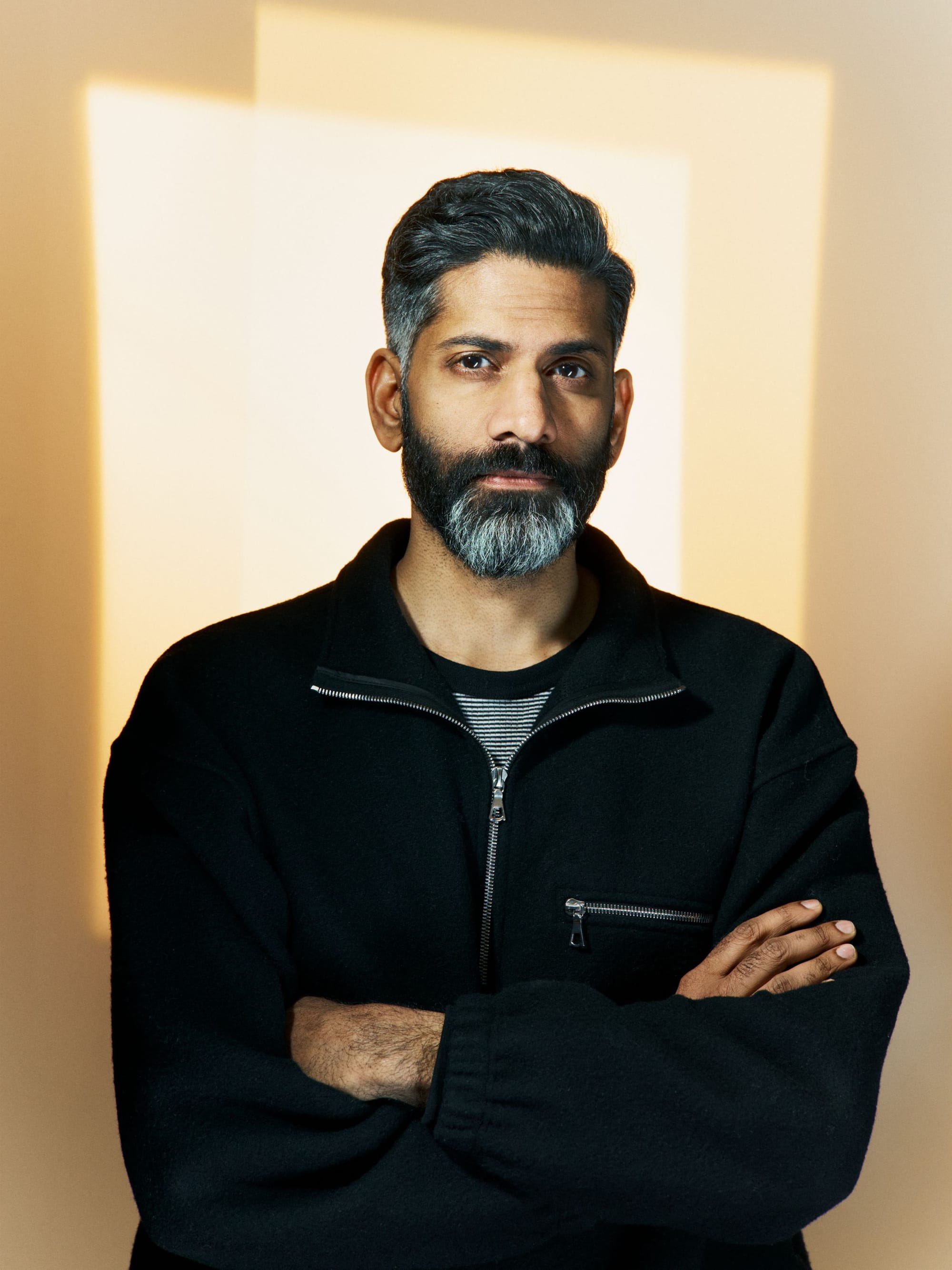
Dr. Shiv Rao, MD is the Founder and CEO of Abridge, the leading AI platform for healthcare that transforms medical conversations into structured, billable clinical documentation. By combining his experience as a practicing cardiologist with deep expertise in AI product innovation, Dr. Rao is focused on unburdening clinicians from administrative work and creating clarity for patients.
Under his leadership, Abridge has scaled rapidly, integrating seamlessly across electronic health records (EHRs) and supporting workflows in more than 50 specialties and 14 languages. The company is projected to support over 100 million patient-clinician encounters in 2026 across hundreds of the largest health systems in the U.S.
Prior to founding Abridge in 2018, Dr. Rao led the provider-facing investment portfolio for UPMC, where he invested in emerging healthcare startups and helped fund the Machine Learning in Health program at Carnegie Mellon University. He continues to practice cardiology at UPMC, a role that ensures his work in AI remains grounded in the realities of frontline clinical care.
Dr. Rao has received extensive recognition for his contributions to the field, including being named to TIME’s 100 Most Influential People in AI and being listed on Modern Healthcare's 100 Most Influential People in Healthcare for two consecutive years. He is also featured on the Forbes 250 America's Greatest Innovators list.
He completed his medical education and training at the University of Michigan and the University of Pittsburgh School of Medicine. An interdisciplinary innovator, Dr. Rao also studied at Carnegie Mellon University, where—among his technical pursuits—he programmed virtual synthesizers and notably skateboarded in IMAX movies.
Upcoming Sessions
Live conversations with the people shaping healthcare.

Verifying AI in Medicine: Is Healthcare AI Actually Ready for Deployment?
Is AI ready for real-world clinical care? Dr. Zak Kohane and Protege’s Engy Ziedan debate what it takes to safely trust AI in diagnosis and treatment, from benchmark performance and clinical evidence to whether we’re holding AI to a higher standard than humans.

Why Are Hospitals Hiring Chief AI Officers?
As AI moves from pilots into day-to-day healthcare operations, health systems are having to decide who should actually own the


Where are AI Agents Actually Working in Healthcare, and Why?
While the healthcare industry remains locked in a high-level debate over the theoretical potential of artificial intelligence, a select group of

Top Employers Share What Healthcare Startups Need to Know in 2026
As enterprise health purchasers face volatile medical cost trends and tightening operational margins, the standard vendor pitch of "improved clinical efficiency&

Peptide Therapy: Where Do We Go From Here?
Watch the full webinar Peptide therapies have moved from niche biohacking circles into mainstream medicine, reshaping conversations around weight management, metabolic health,

Not everyone can access the top 1% of physicians. Will AI change that?
Historically, top-tier medical expertise was limited by wealth and geography. As AI reshapes healthcare delivery, a vital question emerges: can it democratize intelligence to give everyone access to the caliber of care typically reserved for the top 1%?

Privacy AI and the Future of HIPAA
Watch the Full Webinar As AI reshapes healthcare and more patient data flows beyond traditional clinical settings, the rules governing privacy, access,

What will AI do for employer healthcare and benefits?
Employer healthcare may be one of the most practical — and overlooked — proving grounds for AI.

Hospitals as the new go-to-market, lessons from the trenches
Watch the Full Webinar Health systems are entering a new frontier, one where innovation isn’t optional, and meaningful change requires creativity,