

AI drug discovery’s expensive reality

Reporters’ notebook from Ruth Reader: This week, I heard from and chatted with executives in the pharmaceutical space about AI and drug development. At a small event in Manhattan’s Noho, a flock of biotech executives settled at white clothed tables to talk about the challenges and opportunities in AI. Clinical trial innovator Quant Health hosted the gathering, which was off the record, so I won’t be able to share who said what. But I can offer some insight into how top players are thinking about using AI in drug development.
Though pharma is famously stodgy, some of the largest drug makers are transforming how they work in order to best utilize AI. What they are not doing, these executives said, is layering AI onto their existing processes, which, they said, is counterproductive and inefficient. Instead, they are having to rebuild how they develop drugs in order to meet the AI era.
There is a lot of optimism for the use of AI in this category, but challenges remain. Pharma leaders seemed more concerned with the disconnect between the executives who want to use AI and the scientists who fear that AI will replace them.
“When you're actually addressing the heart of what scientists are actually trying to solve,” said Orr Inbar, CEO of Quant Health, told me on the record at the event. “There becomes a bit more tension on, can we trust this tool, how does it fit into the current workflow?” He also said that these workers often don’t have the information they need to understand prospective AI tools and how they work.
Ultimately, companies need buy-in from rank-and-file scientists in order to scale the AI systems they think will ultimately reduce the time it takes to bring a drug to market (the holy grail).
Two executives also spoke about the emerging problem of having AI that disagrees with the company's roadmap. “What do you do when the AI tells you to kill that phase II trial?” one executive asked. Another told me that top leaders love it when AI supports their expectations, but have a harder time trusting it when it doesn’t. This fascinated me. I thought AI was supposed to be the data-backed independent voice in the room? Maybe not.
The Regulators: The Food and Drug Administration is trying to support AI in drug discovery, albeit slowly. Last year, the agency put out draft guidance on using AI-generated data in regulatory decision-making around drug safety and efficacy. This year, it announced ten guiding principles for the use of AI in drug development, forged in partnership with the European Medicines Agency. It also announced two very limited real-time clinical trials, which could help the agency understand the kind of infrastructure it will need to build in order to support the AI-assisted drug trials of the future, one of the executives said.
The agency will have to completely reinvent how it takes in data, they said. These very small pilots—proof of concepts, really—start to deal with the nuts and bolts of rewiring how clinical trials happen with AI. But there is still a lot more work to do, I’m told.
The biggest problem of all: AI for drug development is expensive. Two executives explicitly mentioned concerns around cost. Companies are eating up tokens, the units of text that large language models process, and the adoption of agentic AI is going to explode budgets.
“Agentic AI is expected to drive a 24-fold increase in token consumption by 2030,” says a Goldman Sachs report issued earlier this month. We’re already seeing these trends. As Fortune wisely captured in a story last week, companies are spending more on AI than they do on labor. This week, Axios broke the news on a company that spent half a billion dollars on tokens in a single month. While some startups may be token-maxxing, many large companies aren’t keen to jump on the bandwagon.
For this reason, one executive said, the opportunity for AI use is especially strong with small biopharmas who are nimbler than the legacy behemoths.
What this means: Smaller outfits may have an opportunity to use AI more effectively, potentially reducing their reliance on the big pharmaceutical players.
Reserve Your Spot for Upcoming Webinars!

NEWS
Oura launches its thinnest ring yet
Oura’s latest ring, the Oura 5, is the company’s slimmest ring to date. The ring is 40% smaller and packed with new health features, including blood pressure reading while you sleep, night breathing tracking, and integration with Counsel Health’s medical AI chatbot. Oura Ring 5 starts shipping on June 4 at a base price of $399.
The Pope says AI developers should center humanity
Pope Leo published a cautionary encyclical on AI this week. In it, he urges developers to build for the common good and not to erect a modern-day Tower of Babel and avoid “the idolatry of profit that sacrifices the weak sacrifices the weak, a uniformity that neutralizes differences, and the pretense that a single language — even a digital one — can translate everything, including the mystery of the person, into data and performance. The risk of dehumanization — of building a future that excludes God and reduces the other to a means — is an ancient and ever-new temptation that today takes on a technical guise.”
American Medical Association CEO John Whyte says the challenge in health care will be whether AI preserves the physician-patient relationship.
Ambience Healthcare expands chart-aware tech
The company has expanded its chart-aware intelligence, technology that reads through a patient’s chart history, to include everything that happens between admission and discharge. The tool synthesizes prior notes, labs, imaging, medications, vitals, and orders across every workflow.
A new class of cholesterol drugs is on the horizon
Several pharmaceutical companies have been developing drugs targeting elevated Lp(a), a cause of cardiovascular disease that is hereditary and typically hidden, The Wall Street Journal reports. Lp(a) levels are elevated in tens of millions of people in the US alone, but have proven hard to target. If the drugs are effective, analysts estimate the market could be worth $25 billion a year.
Americans exposed to Ebola are being sent to Kenya
In a departure from previous policy, the Trump administration is reportedly not going to allow Americans exposed to Ebola to enter the US and is instead sending them to Kenya to quarantine. “We know that their chances of getting through an Ebola infection would be higher in specialized units that have been designed to care for them,” Dr. Tom Inglesby, the director of the Johns Hopkins Center for Health Security at the Bloomberg School of Public Health, told The New York Times.
Lilly is on a shopping spree
Eli Lilly is announcing acquisitions worth more than $20 billion as it seeks to expand beyond its weight-loss products. “In recent weeks, Lilly has pledged to shell out up to $7.8 billion for sleep drugmaker Centessa Pharmaceuticals Plc and up to $7 billion for cancer drug developer Kelonia Therapeutics — two of its most expensive deals ever. On Tuesday, it agreed to buy three vaccine developers for as much as $3.8 billion,” Bloomberg reports.
CHAI releases AI governance playbooks
The Coalition for Health AI released a series of playbooks that offer guidance on how to safely implement artificial intelligence across health care institutions. The playbooks are an outgrowth of CHAI’s relationship with the Joint Commission, a health care accreditation non-profit. JC plans to launch a voluntary AI certification based on these playbooks.
DEEP DIVE
“Are we just going to give up and die like every other generation?”
Earlier this month, STAT’s Sarah Todd attended Vitalist Bay, a longevity conference where health tech entrepreneurs and enthusiasts gathered to share ideas and technology to live forever. “Most people in the longevity community are focused on preserving their health as long as they can — either to make it to the current outer limits of longevity, about 120 robust years or so, or to last long enough that science achieves what’s known as longevity escape velocity, where advancements keep piling up so that there’s no limit on how long life might last,” she writes.
DEALS & LAUNCHES
- Oura, which has a current valuation of $11 billion, filed for an IPO. “Hot take: ŌURA is the first women's health company to file for IPO since 2019,” wrote our Christina Farr. “The strategic decision to orient around women (rather than fitness obsessives or biohackers) has translated into owning more than 80% of the wearable ring market and crossing $1B in revenue, with growth continuing to accelerate.”
- Digital care navigator Garner Health raises $100 million in late stage funding.
- Benefitbay, an individualized health benefit administration company, closed an $18 million Series A round led by Ten Coves Capital.
- Longevity startup Retro Bioscience has reached a $1.8 billion valuation in its latest fundraising round.
- Nourish closed a $100 million Series C round led by Menlo Ventures. The company is hiring physicians and moving toward offering more comprehensive metabolic health services.
- Vital Signals, a blood pressure management company, raised $15 million in investments led by XYZ Ventures.
- Ksana Health received a $17.9 million contract from the US Department of Health and Human Services to develop a behavioral health model.
- Innovaccer acquired CaduceusHealth to make revenue cycles autonomous. “Every hour a billing team spends chasing a denial or reworking a rejected claim is time and money that should be going toward patients,” said Innovaccer CEO and Co-Founder Abhinav Shashank, commenting on the company’s fifth acquisition. The terms of the deal were not disclosed.
- AI-managed healthcare provider Swoop acquired Nimble, a prescription management platform, providing digital prescription services to 16 million users.
JOB OF THE WEEK
Firsthand is hiring a General Manager, Washington. This role will lead and scale operations for its mission-driven care model supporting individuals living with serious mental illness (SMI). This leader will own the state P&L, oversee clinical and community-based teams, and drive outcomes across Medicaid and behavioral health populations.Apply Here
LIFERS THIS WEEK!
In this week's episode of Lifers, Chrissy sits down with media-startup founder turned health care executive Chris Altcheck. His company is called Cadence and it’s a digital platform for chronic care management. In this episode, they discuss:
- Why investing is hard
- What he learned about health care from his stint in media (hint: it’s about the risk of platform dependency).
- How digital monitoring at home can lower the overall cost of care for patients
- How it’s using the ACCESS model to automate more aspects of chronic care
- What he sees happening in health care over the next ten years.
Four Questions With Chris Harrison, CEO of Quorum Health
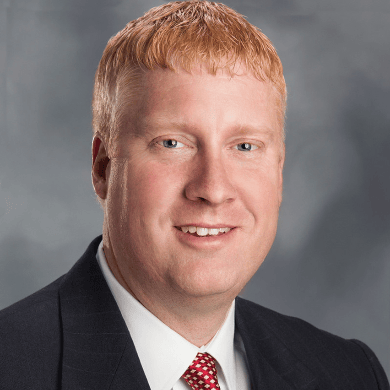
Second Opinion: Tennessee-based Quorum Health filed for bankruptcy in 2020 and subsequently became private equity-owned. You recently made the decision to buy Quorum Health back from your private equity owners and turn the health system non-profit. Why?
Chris Harrison: A couple of reasons. One, I think it sets us up with a healthier balance sheet. It sets us up with a lower cost of debt that gives us more free cash flow for investment both in our current hospitals and markets, as well as growth and expansion. It also sets us up for investment in transformation, with that being in access to care for communities and patients, or technology to better serve our patients that will have the ability to make those investments as well.
Lastly, I'll say our culture and mission, and our hospitals operate already, in many ways, like nonprofit hospitals, and because of the kind of rural markets we're in, and being dispersed across the country, we had challenges partnering or finding large operators, urban operators to partner with, mostly because of our for-profit PE back status. A lot of these larger academics and larger systems want to expand into rural markets and want to find partners to expand. You would kind of hit a roadblock where they're like, well, we don't really partner with for-profit hospitals. So I think it opens up the ability to partner and expand in sort of the hub and spoke model, and leveraging their technology and their resources to better serve our communities and patients.
Second Opinion: Is there anything about the political landscape that makes it, or even the financial landscape, that makes it a good time to go nonprofit?
Chris Harrison: I do think you ease a lot of the pressure at the state level by going to a nonprofit, because a lot of states have put in these oversight and review and approvals of transactions because they don't want their hospitals going for-profit and into the hands of PE. I do think it is the right move, because again, to my opening comments, the cost of the debt, and to be able to issue tax-exempt municipal bonds to fund it, instead of Quorum, was a bankruptcy in 2020, a Chapter 11. And when you restructure debt, believe it or not, you don't get the lowest interest rate you can possibly get.
We've been living a high-leverage company life for five years, six years, and this new structure will relieve some of that pressure. It'll be a higher cost debt from a nonprofit standpoint, just because we won't fully be there on the metrics that all these larger, more established nonprofits are, but compared to today, it'll be a total new lease on life.
Second Opinion: There’s such a huge push for more hub-and-spoke models in rural health care from the federal government, which is deploying billions through the rural health transformation fund program. Do you see that as an opportunity?
Chris Harrison: We have, I'll call it a hub-and-spoke light model today at our hospital in Utah. We have an affiliation with the University of Utah out there, where we use their physicians in the hospitalist program and throughout the hospital. The name of the hospital is Mountain West Medical Center, an affiliate of the University of Utah. The benefit to the University of Utah is they get clinical data. It's not a financial relationship, just a joint venture. The patient automatically thinks much higher of the quality of care and everything that's happening in the hospital…just because of the name and the physicians. That's been a very successful relationship for us, and I think it's been successful for the University of Utah. It's a win-win relationship that we want to rinse and repeat in other markets.
I think where a lot of these large systems struggle is they don't know anything different other than running the hospitals the way they run it, and when they go out to some of these rural markets, and they try to put in their operation model and their costs and all the things that they have, it just doesn't work as well. We know how to run these hospitals, we know how to run them with fewer beds, run it the most cost-efficient way that's beneficial to patients in the community, and we can partner and do that, and be your operator, and it's your way to expand out into the market and expand your footprint without having to take on the burden of being the operator.
Second Opinion: What tech are you investing in?
Chris Harrison: We are changing our EMR.
The other investments in technology are going to be centered around how you deploy technology to reach more people. Obviously, in the rural setting, your population is spread out, and it's pretty wide, and you could have people who live hours away. So, how can you use technology to reach them via telehealth, via remote patient monitoring, via all the various technologies that are out there? Also, provide better care, because, as you can imagine, when people have to drive a long way, they'll often put off care, or not do regular annual care. So you're also trying to figure out how to make these investments that improve the overall health of the population and the community.
We are also standing up a Management Services Organization to do rev. cycle management and IT to support rural hospitals.
Chris Harrison serves as Quorum Health’s Chief Executive Officer. His extensive healthcare background spans nearly two decades, primarily in acute care hospital organizations. He has held leadership positions with HCA Healthcare, LifePoint Health, and Surgery Partners.
Upcoming Sessions
Live conversations with the people shaping healthcare.

Verifying AI in Medicine: Is Healthcare AI Actually Ready for Deployment?
Is AI ready for real-world clinical care? Dr. Zak Kohane and Protege’s Engy Ziedan debate what it takes to safely trust AI in diagnosis and treatment, from benchmark performance and clinical evidence to whether we’re holding AI to a higher standard than humans.

Why Are Hospitals Hiring Chief AI Officers?
As AI moves from pilots into day-to-day healthcare operations, health systems are having to decide who should actually own the


Where are AI Agents Actually Working in Healthcare, and Why?
While the healthcare industry remains locked in a high-level debate over the theoretical potential of artificial intelligence, a select group of

Top Employers Share What Healthcare Startups Need to Know in 2026
As enterprise health purchasers face volatile medical cost trends and tightening operational margins, the standard vendor pitch of "improved clinical efficiency&

Peptide Therapy: Where Do We Go From Here?
Watch the full webinar Peptide therapies have moved from niche biohacking circles into mainstream medicine, reshaping conversations around weight management, metabolic health,

Not everyone can access the top 1% of physicians. Will AI change that?
Historically, top-tier medical expertise was limited by wealth and geography. As AI reshapes healthcare delivery, a vital question emerges: can it democratize intelligence to give everyone access to the caliber of care typically reserved for the top 1%?

Privacy AI and the Future of HIPAA
Watch the Full Webinar As AI reshapes healthcare and more patient data flows beyond traditional clinical settings, the rules governing privacy, access,

What will AI do for employer healthcare and benefits?
Employer healthcare may be one of the most practical — and overlooked — proving grounds for AI.

Hospitals as the new go-to-market, lessons from the trenches
Watch the Full Webinar Health systems are entering a new frontier, one where innovation isn’t optional, and meaningful change requires creativity,