

ChatGPT Health debuts

One reporter’s notebook: Like many journalists this week, I demoed ChatGPT Health, which just debuted. The new tool is extremely useful, and made recommendations on chronic health issues that, quite frankly, I was never going to visit a doctor about. But I wonder if maybe it is going a little too far into what is basically the practice of medicine.
Chrissy and I debate the good and bad of AI all day long, so be sure, the below are my thoughts only on ChatGPT’s Health. She has different views, which is part of the fun!
This week OpenAI launched Health, which allows users to connect their medical records and Apple Health data to the platform. I could only connect my fitness data from Apple Health and a hospital record from when I gave birth. Still, the models it uses are trained for the task of making health recommendations. OpenAI works with “more than 260 physicians across 60 countries, 49 languages, and 26 medical specialties” to train models for Health.
The good: I tested Chat on a few things. Serendipitously, I was sick. I was convinced I had West Nile virus. Chat was not so sure. The app told me it was more likely a viral infection, strep throat, COVID-19, influenza, or another infection. It also suggested I might have meningitis at one point and urged me to go to a doctor. I reassured Chat that my symptoms were improving (I’m fine).
“If you're not mostly back to normal within about a week, or if the swollen lymph nodes remain enlarged after the rest of the illness has resolved, it would be worth making an appointment with your primary care clinician to be examined,” it told me.
I also queried it about my fitness routine to see if it’s good enough and what other steps I could take to ensure that I actually get around to doing it (my most persistent problem). It suggested that rather than trying to work out at a specific time of day, I think about placing the work between work tasks. A worthwhile suggestion.
Finally, we chatted about my sleep issues. I’ve had insomnia, though I’ve never been officially diagnosed with it, since I was a child. I have never thought to mention this to my primary care doctor, because it comes in clusters and isn’t usually happening during my annual exam. I had a recent spell of it, so I told Chat about when it started for me, the circumstances under which it started, and how it was manifesting in adulthood.
Chat said I have chronic sleep-maintenance insomnia. The app gave me several suggestions for what to do when I have these wake-ups, but it repeatedly suggested I look into Cognitive Behavioral Therapy for Insomnia. Then it proceeded to demo what a session would look like, replete with therapist-patient banter.
The questions: So what do I think of this experience? I honestly don’t know how to evaluate the information I was given. Was it useful? Absolutely. Is it accurate? I don’t know.
My sense is that though ChatGPT can be really helpful, especially for people with longstanding complex health issues that doctors have not been able to figure out, it overreaches when it comes to health queries. It offered answers to questions about my health problems and though it did encourage me in more than one instance to seek out a doctor, it also gave me enough information to stay home. It repeatedly told me I probably just have a regular virus. Even with the suggestion that I seek out CBT-I, it gave me a good indication of how I could do it myself if I was motivated.
This overreach might be fine, if there were guardrails in place, particularly around accuracy. But the federal government hasn’t regulated this technology yet. And allegedly, some people are potentially experiencing harms. This week a man sued OpenAI for repeatedly misdiagnosing him and assuring him he didn’t have a serious illness.
Final thoughts: As many doctors and even health tech founders know, there are a lot of barriers to seeing a doctor. When ChatGPT makes it this easy to believe you’ve found the answer, it could represent one more thing that will keep people from seeing a professional.
These are just my initial thoughts; I welcome yours. Now onto the news.
Reserve Your Spot for Upcoming Webinars!
Episode 2 of Rounds is here!
Co-hosted by Christina Farr and Stephanie Davis, this episode dives into the biggest debates shaping digital health right now. Keaton Bedell, co-founder and CEO of Bridge, joins to unpack an exclusive data report on where virtual care is headed next, and Joe DeVivo, President, CEO, and Chairman of Butterfly Network, sits down to talk about the Midjourney partnership that's redefining the future of full-body imaging.


NEWS
Peptides proceed
Peptides caused a stir this week when a Food and Drug Administration advisory committee recommended the agency lift restrictions on compounding peptides BPC-157, TB-500 and KPV. These particular peptides are used for tissue repair and gut health, but there’s limited data backing their use. Though the FDA doesn’t have to take the recommendation, wellness enthusiasts rejoiced. Doctors and academics raised concerns that compounded peptides won’t have the same oversight as those manufactured by pharmaceutical companies.
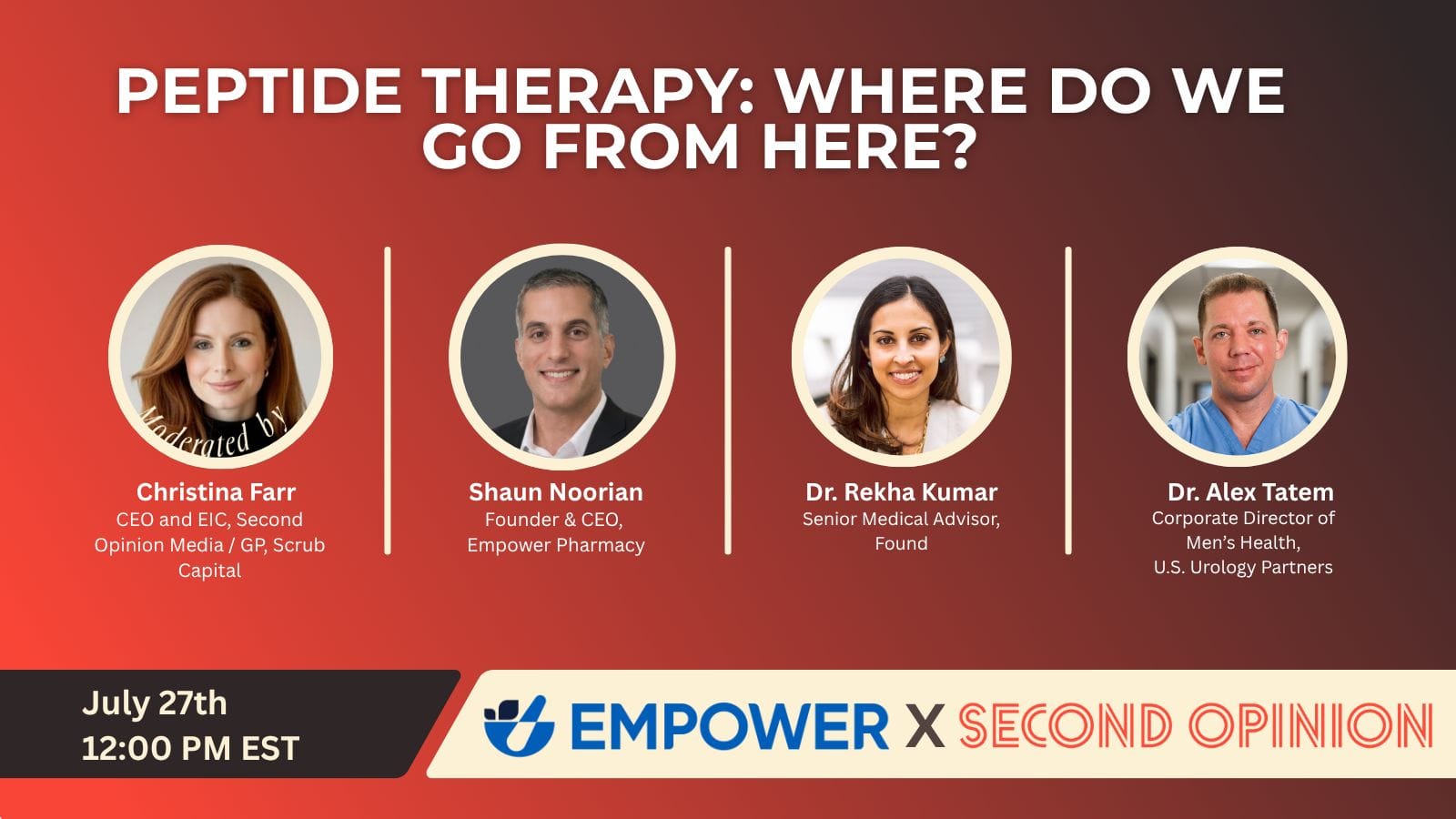
“If MOTS-c – or any other unapproved peptide – really has therapeutic effects, let the benefit be shown in clinical trials,” said Adriane Fugh-Berman, Georgetown professor of pharmacology and physiology in her sworn testimony. For more tune-in next week, when Christina Farr discusses peptides with Shaun Noorian, Founder & CEO, Empower Pharmacy, Dr. Rekha Kumar, Senior Medical Advisor, Found, and Dr. Alex Tatem, Corporate Director of Men’s Health, U.S. Urology.
Biotech is open for betting
Prediction market platform Kalshi is expanding into biotech, allowing bets on clinical trial outcomes and regulatory decisions. Healthcare remains a small slice of the platform’s transaction volume, with $3.6 million in science and technology trading in late June versus $5.4 billion for sports.
CMS proposes blocking third-party remote patient monitoring
The Center for Medicare and Medicaid Services draft CY2027 Physician Fee Schedule rule proposes blocking third-party vendors from remote patient monitoring. Remote Patient Monitoring and Remote Treatment Monitoring would be reimbursed only if provided by staff employed at the billing practice, and not subcontracted. The move tries to reduce a fast-growing line item: Medicare RPM payments rose 31% to $536 million in 2024, with nearly 1 million enrollees served. Health tech leaders are warning that the change may force small and rural providers to end remote monitoring programs entirely. Read Ruth’s analysis here.
Republicans saved WISeR
The Senate voted 46-50 along party lines to reject a Democrat-led resolution seeking to roll back CMS's AI-driven WISeR prior authorization model, upholding the controversial pilot. The year-long, six-state program uses AI to review the appropriateness of 13 "low-value" Medicare services and has drawn opposition from the American Hospital Association, the American Medical Association, and provider groups citing care delays.
Scooplet on Utah’s AI Sandbox
As its sandbox program expands, the Utah Office of Artificial Intelligence Policy is investigating the role independent third party organizations could play in both vetting AI health product proposals and providing oversight. In a call for applications viewed by Second Opinion, the office asks for qualifying organizations to submit proposals to validate, oversee products, or both. For vetting, capabilities should include the ability to validate governance structures, conduct red-teaming of products, and assess clinical expertise. For oversight, entities should be able to provide a series of on-going monitoring capabilities and validate performance.
A new investigation…
LifeMD, a telehealth company that is part of Novo Nordisk’s network of providers “legitimate medicine sourcing and patient support” for GLP-1, is overlooking patient safety in favor of profit, found Stat reporter Elaine Chen in an investigation. Former workers said, “providers at times were expected to review the cases of 25 people per hour based only on electronic forms the patients filled out — the equivalent of spending about two minutes on each case.” The company would push for prescriptions to be filled regardless of whether they represented the best standard of care for the patient.
DEALS & LAUNCHES
Karoo Health, which enables cardiology networks, health systems, and health plans to deliver value-based cardiovascular care, raised a $16.2 million Series A co-led by Allumia Ventures and 7wire Ventures. The company works with a network of roughly 600 cardiac providers across 11 states.
Candid Health, the autonomous RCM platform, raised $120 million in Series D funding led by Sixth Street Growth. This funding follows Candid’s $52.5 million Series C fundraise in February 2025, and comes as annual revenue grew 190% year over year. So far, the company has raised more than $219 million.
Assured Health, a native AI credentialing platform, raised $19 million in a Series A round led by Insight Partners.
Inner Logic, an infrastructure that allows device manufacturers to virtually simulate surgeries for testing, raised $11.5 million in a seed round co-led by General Catalyst and Bison Ventures.
Hilo, a health technology company, launched a wearable blood pressure monitor and announced a $19 million extension to its Series B, which brought its total funding to $119 million.
Tempus AI agreed to acquire Personalis, a molecular residual disease (MRD) testing company, at $16.25 per share, for a total value of $1.5 billion structured as a stock transaction (with a cash option up to 50%) expected to close in late 2026 or early 2027. The deal builds on the companies' 2023 partnership and integrates Personalis's ultrasensitive NeXT Personal MRD test into Tempus's AI-enabled precision oncology platform.
UnitedHealth Group posted its Q2 net income of $5.48 billion, up from $3.4B a year earlier, and raised its full-year 2026 adjusted earnings guidance to $19.50-$20 per share. The improvement was driven largely from exiting unprofitable ACA and Medicare Advantage markets, which also cut membership to about 48.5 million.
HCA Healthcare lowered its 2026 guidance after preliminary Q2 results took a roughly $400 million pre-tax hit from rising volume of uninsured patients, tied to expiring ACA exchange subsidies. The health care facility operator now expects full-year revenue between $77 billion and $79.5 billion, and lowered its ranges for net income from up to $7 billion to up to $6.7 billion.
GE HealthCare and Catholic Health, a six-hospital New York nonprofit system, struck a 10-year, $500 million strategic partnership to outfit the provider's facilities with advanced imaging, AI, and other technologies. Among GE HealthCare's largest such deals to date, it will add more than 1,300 pieces of technology across more than 40 sites, with the first rollouts (including contrast-enhanced mammography and maternal-infant care monitoring) arriving within months.
Anthropic just announced a new $50,000 research grant call focused on rare genetic diseases, under its AI for Science program. The program has two tracks: one for scientists doing basic research and another for early-stage biotechs working on speeding up clinical development for rare diseases. Applications are here.
Join the Fearless Fractionals
Fractional work continues to appeal to healthcare organizations for the ability to access senior talent without the full-time commitment or agency overhead. Attendees joined from across the country, sharing impressive work spanning product development, commercial strategy, go-to-market optimization, and brand awareness.
Beyond the events, Fearless Fractionals has become an incredible referral network, bringing together a vetted community of top talent across the industry, where members trust each other enough to pass along business and bring one another into the right rooms.
Our group continues to grow. If you'd like to take part, introduce yourself here: REGISTER HERE
Send us your burning questions!
We want to launch a new advice column for Second Opinion readers. What questions are you dying to ask the Second Opinion community, high-level executives, or another founder?
You can send your questions here.
Four Questions with Kelly Bliss
Christina Farr: What's the most unique aspect of Teladoc One? Some aspects seem entirely new, while others feel like evolutions of concepts we've seen from Teladoc or its peers before. Can you walk us through that?
Kelly Bliss: The biggest difference is that we're introducing a connected care model that integrates primary care, acute care, behavioral health, and chronic care around the individual. And not around a condition or disease.
The reality is that patients' needs change over time, so the care model has to adapt with them.
Our clients have told us they've seen strong clinical outcomes from virtual care. Now they're asking for something more: clinical outcomes that translate into financial outcomes.
That's really the thesis behind Teladoc One. It's an integrated care model built around health needs and outcomes, with the explicit goal of improving both clinical results and medical economics.
Different clients come to us with different priorities. Employers, health plans and ASO clients all have different populations and different objectives, but they're all asking the same underlying question: how do we translate better care into lower healthcare costs?
Christina Farr: You mentioned spending several years building the technical architecture. What was the biggest challenge in getting this right?
Kelly Bliss: We took the time to build what we believe is the right predictive and adaptive intelligence platform. Last year we launched our predictive intelligence layer, but the work behind it started years earlier.
The challenge was bringing together multiple sources of data, including claims, medical records, pharmacy, and health information exchange data. With that, we created a model that could truly personalize care while supporting clinicians across virtual and physical environments.
The result is threefold. A provider platform that generates individualized care plans based on each member's needs and determines who should be involved in that care team. Integration with members’ preferred providers outside Teladoc. And always-on engagement in the form of human clinicians or AI support.
AI has a defined role within the care team. It does not provide care. It supports the clinicians and helps patients stay on their care plan through tasks like reminders, medication adherence, nutrition check-ins, and other ongoing engagement. Those are all activities that support clinicians and help patients stay on track.
Christina Farr: What's your view on how pricing has evolved in the employer market, and how has Teladoc responded?
Kelly Bliss: Employers increasingly want to tie payment to measurable value. They're asking vendors to demonstrate not only clinical outcomes but financial outcomes as well.
We'll continue launching Teladoc One using the pricing models employers are familiar with today, like a PPPM that is based on engagement, but we're also increasingly willing to put more of our fees at risk.
The more access we have to data, and the more opportunity we have to manage a population through an integrated model, the more confidently we can align our compensation with outcomes.
Ultimately, that's where we believe the market is heading.
Christina Farr: COVID was a defining moment for virtual care. As things have stabilized, what are you seeing now? Has virtual care plateaued?
Kelly Bliss: I used to get this question much more often.
My view is that until every patient is delighted with every healthcare experience, virtual care still has an important role to play.
Early on, the question was whether we could deliver high-quality care virtually. We've demonstrated that we can and have shown strong clinical outcomes.
Today, the question is different. It's about proving value to employers and health plans.
We're seeing strong demand for that next generation of virtual care. This is the next era for the industry, and as one of the largest scaled virtual care practices, we're all in.
About Kelly Bliss
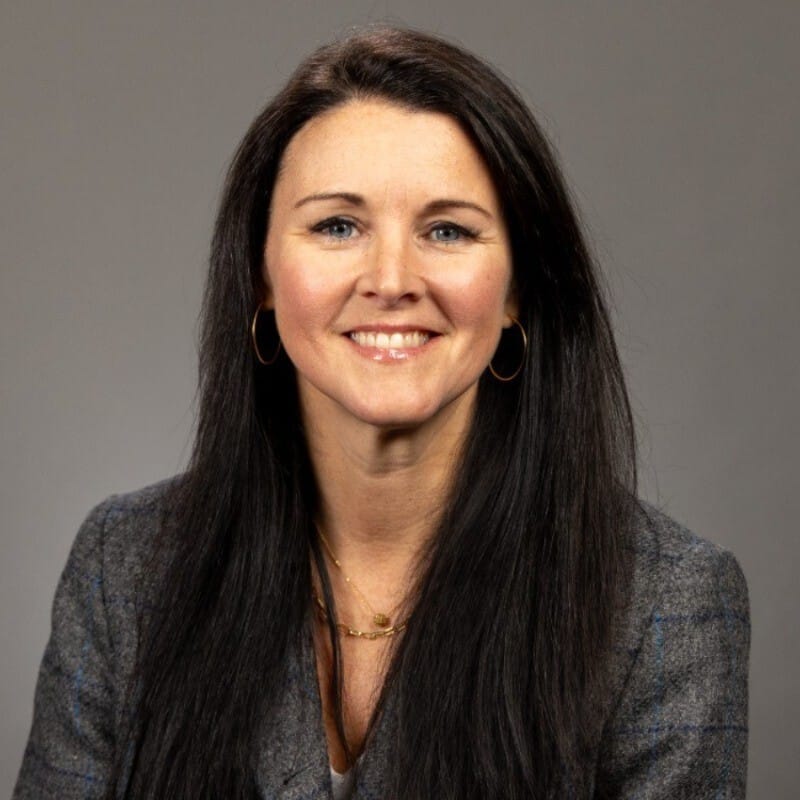
Kelly Bliss is president of Teladoc Health’s U.S. Group Health (USGH) business. She oversees strategy, partnerships, product management, marketing, sales, operations, and client management as lead executive for the business making virtual care services available to more than 100 million covered Americans.
Ms. Bliss leads the USGH executive leadership team, guiding the company’s growth across several markets, including Health Plans, Employers, and government markets. Ms. Bliss has led the integration efforts of several acquisitions and brings a tech-forward entrepreneurial skill set at scale. Prior to holding the role of president, she was chief client officer at Teladoc. Under her leadership, client management achieved record satisfaction and retention through a focus on delivering value and a best-in-class experience to Teladoc clients, which yielded multiple, consecutive years of record-breaking growth. Ms. Bliss has also built and managed high-functioning, global teams at companies including Best Doctors and InterSystems. At Best Doctors, she served as chief of staff, leading the organization's key strategic growth initiatives until the eventual acquisition by Teladoc Health in 2017.
Throughout her career, Ms. Bliss has contributed to numerous industry panels and thought leadership forums, sharing her expertise and insights on healthcare innovation and digital transformation. This includes her most recent appointment to the Advisory Board for the Federal Reserve Bank in New York. Her extensive experience and dedication to excellence continue to drive Teladoc's mission of transforming healthcare delivery.
Ms. Bliss was recognized as one of the Top 25 Women Leaders in Healthcare Software by The Healthcare Technology Report. She holds a bachelor's degree in industrial psychology from Nichols College and enjoys mentoring emerging talent across the industry and curating high-performing teams.
Upcoming Sessions
Live conversations with the people shaping healthcare.

Verifying AI in Medicine: Is Healthcare AI Actually Ready for Deployment?
Is AI ready for real-world clinical care? Dr. Zak Kohane and Protege’s Engy Ziedan debate what it takes to safely trust AI in diagnosis and treatment, from benchmark performance and clinical evidence to whether we’re holding AI to a higher standard than humans.

Why Are Hospitals Hiring Chief AI Officers?
As AI moves from pilots into day-to-day healthcare operations, health systems are having to decide who should actually own the


Where are AI Agents Actually Working in Healthcare, and Why?
While the healthcare industry remains locked in a high-level debate over the theoretical potential of artificial intelligence, a select group of

Top Employers Share What Healthcare Startups Need to Know in 2026
As enterprise health purchasers face volatile medical cost trends and tightening operational margins, the standard vendor pitch of "improved clinical efficiency&

Peptide Therapy: Where Do We Go From Here?
Watch the full webinar Peptide therapies have moved from niche biohacking circles into mainstream medicine, reshaping conversations around weight management, metabolic health,

Not everyone can access the top 1% of physicians. Will AI change that?
Historically, top-tier medical expertise was limited by wealth and geography. As AI reshapes healthcare delivery, a vital question emerges: can it democratize intelligence to give everyone access to the caliber of care typically reserved for the top 1%?

Privacy AI and the Future of HIPAA
Watch the Full Webinar As AI reshapes healthcare and more patient data flows beyond traditional clinical settings, the rules governing privacy, access,

What will AI do for employer healthcare and benefits?
Employer healthcare may be one of the most practical — and overlooked — proving grounds for AI.

Hospitals as the new go-to-market, lessons from the trenches
Watch the Full Webinar Health systems are entering a new frontier, one where innovation isn’t optional, and meaningful change requires creativity,