

CMS wants to pay for AI as a medical service

Right before the holiday last week, the Centers for Medicare and Medicaid Services proposed creating a new Medicare payment category for algorithmically driven care called Software as a Medical Service.
The new terminology was included in the 2027 Hospital Outpatient Prospective Payment System and Ambulatory Surgical Center Proposed Rule, which dropped on July 2. It was designed to clarify a payment pathway for “software-based technologies that support clinical decision making through algorithmic analysis, including those that provide clinical or diagnostic functionality.”
In part, SaMS is designed to differentiate these kinds of AI-technologies from remote patient monitoring and digital therapeutics. The payment policies outlined for SaMS 2027 will also be temporary. The agency says it sees next year as an interim step towards a more comprehensive payment methodology for this new category.
Cybil Roehrenbeck, executive director of advocacy groupAI Healthcare Coalitionand a partner at the law firm Hogan Lovells, says that her organization has been pushing for the agency to come up with a more predictable and permanent payment pathway for AI medical services.
The proposed rule designates 36 Healthcare Common Procedure Coding System codes as SaMS. But Roehrenbeck notes that all of the services listed are distinct and in their own categories. She says a lot of questions remain about what else will be included.
“How do we distinguish between services that have already been reimbursed and paid for multiple payment cycles versus some that are newer,” she said.
Comments on the proposed rule are due by August 31, 2026. In the meantime, digital health companies should be on the lookout for the proposed 2027 Medicare Physician Fee Schedule, which is supposed to come out imminently.
Separately, President Donald Trump’s administration is experimenting with paying for AI medical services through value-based models of care, through itsAdvancing Chronic Care with Effective, Scalable Solutions Model. It will be interesting to see if and how the agency’s desire to control costs manifests for SaMS.
Now onto the news!
Reserve Your Spot for Upcoming Webinars!
Episode 1 of Rounds is here!
Co-hosted by Christina Farr and Stephanie Davis, this episode dives into women’s health care. Megan Scheffel from Silicon Valley Bank joins to break down the latest SVB women’s health report, and Joanna Strober, Founder of Midi Health, sits down to talk about building a billion-dollar company out of a gap the healthcare system has spent decades ignoring.


NEWS
GLP-1 online prescriptions lack medical oversight
A secret shopper study found that the vast majority of online GLP-1 prescribers (45 out of 49 analyzed) would fill prescriptions for the drug within a day and sometimes in minutes, even when the made-up patient profiles fell short of the care standards. Patients received prescriptions from the same physicians for different sites.
This confirms experts’ concerns about online prescribers. “Their goal is to be able to prescribe, and not to provide guidance to make sure this prescription is actually appropriate for the patient,” said the study’s senior author Reshma Ramachandran of the Yale School of Medicine.
Obamacare insurers are seeking another big rate hike
Many Affordable Care Act premiums rose dramatically last year, but insurers are proposing another significant hike, with an average 14% increase for 2027. In 2026, the median rate increase was 20%. This is bound to hit enrollees who don’t qualify for subsidies (individuals with an income of $63,000 or families of four with an income of $128,000).
This is especially relevant as more and more small businesses struggle to offer their employee health coverage, as STAT’s Bob Herman chronicles in his new series Out of Pocket, Out of Reach, a damning investigation on how the skyrocketing cost of health insurance is leaving many business owners, and their workers, without many options.
“The future is beyond building more models.”
As the year crosses its midpoint, Healthcare Brew asked three health tech executives to predict what the rest of the year will bring, and what to focus on. To nobody’s surprise, the answer was AI — with some caveats.
DEALS & LAUNCHES
Handspring, a provider of youth behavioral health services, raised a $19 million Series B led by RPS Ventures to expand its mental health model. The company has raised $37 million to date.
Pearl Health, a health tech company focused on serving the Medicare population, raised $110 million combining equity investment led by Andreessen Horowitz and a debt facility led by Trinity Capital. The funding will support the company’s AI platform’s expansion as well as power its entrance into the Medicare Advantage market.
British speech therapy for children startup Saltroad raised £1.5 million (close to $2 million) in a funding round led by Techstart Ventures. The company also acquired AI documentation platform Ogma.
ONTO Health, a physician-led fertility and longevity provider, acquired LEVY Health, a clinical decision support software company providing precision diagnostics and patient intake for reproductive medicine. The acquisition follows ONTO's recent $20 million Series A. The financial details of the transaction were not disclosed.
Experity, a health tech platform for urgent care clinics, acquired Exdion Healthcare, an AI-driven software services company. The acquisition aims to accelerate revenue cycle management automation for on-demand care. The financial terms of the acquisition were not disclosed.
OpenLoop, a provider of virtual care staffing and support to digital health companies, acquired Hey Revia, a Y Combinator-backed voice AI platform that automates healthcare operations. OpenLoop will integrate Hey Revia into Launchpad, its self-serve telehealth platform. Hey Revia’s cofounders Shaun Wei and David Zhu will join the engineering toeam as part of the agreement.
CurifyLabs, a health technology company automating the production of personalized medicines serving compounding pharmacies across 21 states, closed a $14 million Series A. The round was co-led by Sandwater and HealthCap.
Evernorth unveiled Pharmacy Forward, a new specialty pharmacy program that uses AI to drive more coordinated care and offer personalized, real-time support for patients with complex conditions. The program, in which Evernorth plans to invest $100 million through 2028, will first be available to Accredo Specialty Pharmacy customers.
Join the Fearless Fractionals
Fractional work continues to appeal to healthcare organizations for the ability to access senior talent without the full-time commitment or agency overhead. Attendees joined from across the country, sharing impressive work spanning product development, commercial strategy, go-to-market optimization, and brand awareness.
Beyond the events, Fearless Fractionals has become an incredible referral network, bringing together a vetted community of top talent across the industry, where members trust each other enough to pass along business and bring one another into the right rooms.
Our group continues to grow. If you'd like to take part, introduce yourself here: REGISTER HERE
This Week On Lifers!
Yusuf Sherwani, MD Co-Founder and CEO of Pelago, joins Chrissy to unpack a strange paradox in American healthcare: addiction touches roughly one in five people, quietly drives the top spend categories on every employer's health plan, and yet remains the most stigmatized and least-treated chronic condition in the system.
Only about 10% of people with a substance use disorder ever receive treatment, and even that group is often routed out-of-state and out-of-network into a residential rehab industry that gets paid for the first six weeks, with little incentive for long-term follow-up.
Yusuf makes the clinical case that addiction is a chronic condition like diabetes or heart disease: strong genetic and epigenetic components, a relapse pattern that responds to ongoing management, and recovery rates that are actually better than many other chronic conditions when incentives support long-term care.
The surgeon general reported last year that alcohol has become the third-leading cause of cancer in the US. With tobacco at number one, addiction of some kind sits behind two of the top three causes.
People with untreated substance use disorder cost roughly 2.5x more than the general population, and Pelago members show a net reduction in overall healthcare spend of roughly $12,000 per person, independently verified by Aon. About 80% of those savings show up in physical health categories like cardiovascular and MSK.
Addiction cuts across the org chart: 70% of people with an addiction are in the workforce, and Pelago's own data shows no meaningful difference in enrollment or severity between blue-collar and white-collar populations. Hospital systems are among its biggest clients.
Yusuf explains why he believes purpose-built AI, not general chatbots, is the right modality for behavioral health, and introduces Sona, Pelago's AI tool designed to challenge patients rather than validate them. He tested it as patient zero, on himself and his own marriage.
He also makes the case for outcomes-based pricing over session-based billing, citing a "dose curve" where over-engaging with an AI mental health agent can actually worsen outcomes, and pushes back on "tech care perfectionism" while keeping clinicians in the loop for all escalations.
Thanks to Pelago who facilitated this conversation. Pelago is the leading specialty substance use care provider, built on the belief that effective treatment means matching care intensity to what each member actually needs rather than defaulting to the most expensive intervention. Our programs deliver personalized treatment for tobacco, alcohol, opioid, cannabis, and stimulant use based on individual health, habits, genetics, and goals. With Sona, our voice-first AI Mental Health Specialist, Pelago now applies that same clinically-driven model to mental health, pairing deep clinical expertise with technology to expand access without compromising care quality.
Four Questions with John Voith
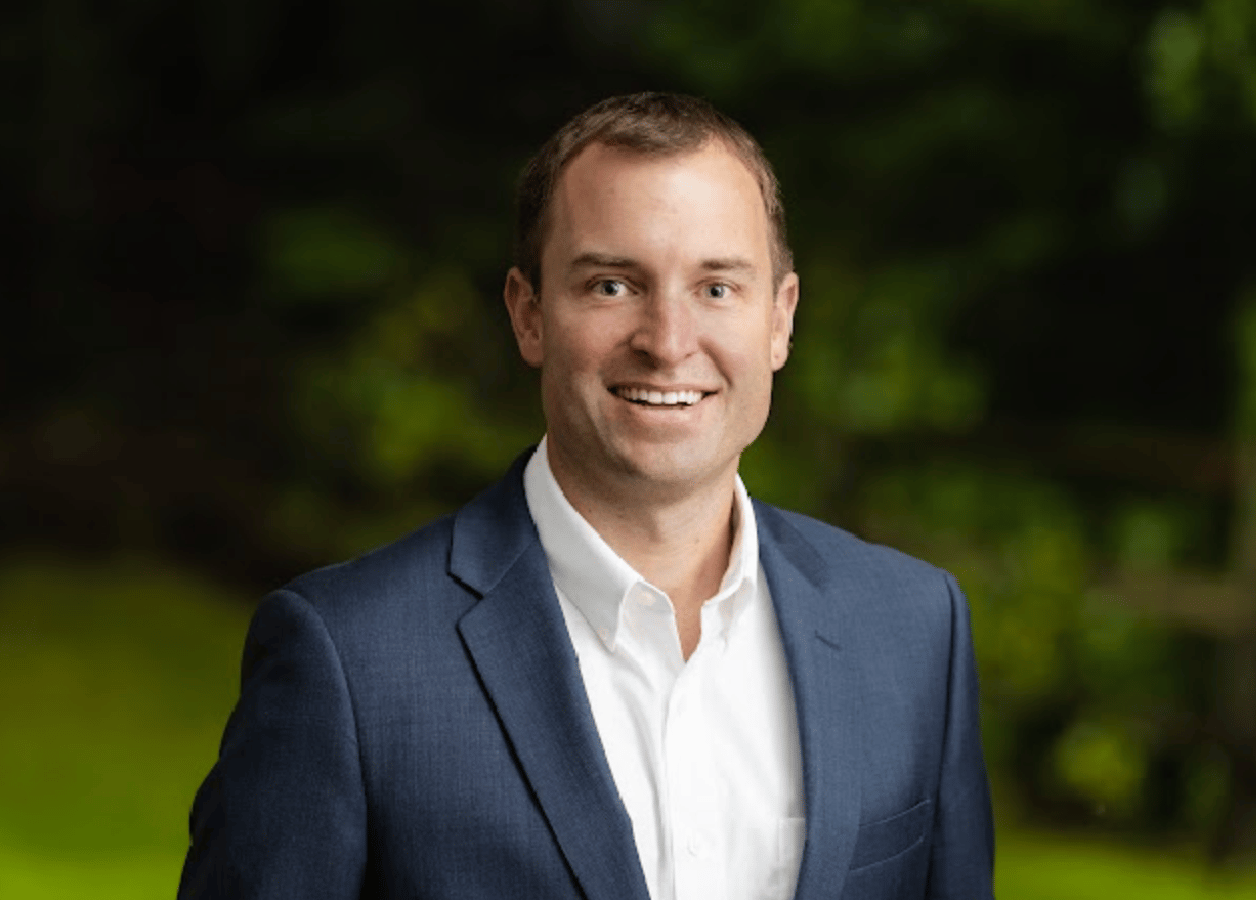
Christina Farr: In the pandemic, it became apparent that virtual could work extremely well for behavioral health conditions—and in some cases, outperform in clinic settings. What was the "aha" moment for you?
John Voith: One of our earliest clinical insights was that virtual care could offer unique clinical advantages for children and adolescents with complex anxiety, OCD, and related disorders.
The reason is that the symptoms of these disorders don't primarily interfere with a child's life during a therapy session. They interfere at home, at school, in social situations, and during everyday moments. That's why the best place to deliver evidence-based treatment is often where those symptoms actually occur. Virtual care enables that in a way traditional office-based models simply can't.
The same logic applies to traditional, in-person partial hospitalization and intensive outpatient programs, which serve an essential role in the behavioral health continuum. It might seem intuitive that delivering care face-to-face in a traditional treatment setting would create the greatest therapeutic impact. But for complex anxiety and OCD, what matters most isn't where the clinician is—it's where the child actually experiences the symptoms and associated challenges. That's why delivering evidence-based treatment where they naturally occur is so powerful. That's where lasting behavior change happens.
That's also why virtual was the ideal platform for the care model we wanted to build. We don't just treat the patient—we coordinate parents, schools, pediatricians, and other caregivers so everyone is reinforcing the same evidence-based treatment plan. Our clinicians become part of a child's everyday life rather than interacting primarily through scheduled office visits.
The real "aha" moment wasn't that virtual was a better technology. It was that virtual enabled a fundamentally different model of care—one built around where children actually experience complex anxiety and OCD. We redesigned the care model around that insight, building multidisciplinary care teams and making families, schools, and pediatricians active participants in treatment rather than simply moving office visits onto a screen.
Once we realized that, the question became: How do we deliver this model consistently for thousands of families without compromising quality? That's where AI becomes exciting—not replacing clinicians, but helping exceptional care teams deliver the same high standard of care at a meaningful scale.
Christina Farr: Payers are seeing a lot more utilization when it comes to virtual behavioral care than in prior decades. How are you measuring ROI? And what specifically are you measuring?
John Voith: We understand what payers are seeing in terms of utilization, and we ask a more specific question: not just whether patients are using care, but whether they're getting better.
We're a program with a defined beginning and a defined end. The goal isn't utilization. The goal is helping children achieve meaningful symptom improvement and a return to full daily functioning.
Because of that, we focus heavily on outcomes. We measure symptom reduction, improvements in daily functioning, caregiver impact—including reductions in workplace absenteeism and presenteeism—treatment engagement, and whether patients are achieving clinical goals within a defined period of time. Ninety-two percent of caregivers reported a reduction in missed work after their child completed our program—a reminder that treating a child's mental health has real, measurable ripple effects on the entire family.
From a payer perspective, the most important question is whether care is changing the trajectory of a patient's illness. Too often in behavioral health, success gets measured by activity rather than results. More visits, more services, and more utilization are not inherently signs of success if they aren't leading to meaningful improvement.
Our philosophy is simple: high-quality care should help patients get better, not simply remain in treatment. That's better for families, for outcomes, and ultimately for the healthcare system.
Christina Farr: In behavioral health, we know how to "step up" care to those that need a higher level of support. How about the model to "step down" care once a patient stabilizes?
John Voith: In many ways, step-down planning begins on day one.
A high-quality behavioral health system needs to do both—step up care when needed, and step down with intention as patients improve.
We're intentionally designed as a specialty program rather than an indefinite source of care. We begin treatment with a clear goal: helping children achieve meaningful symptom and functioning improvement, and ultimately, graduation from specialty care.
As patients improve, the focus shifts to relapse prevention and building confidence in managing challenges independently. A successful discharge isn't a patient who still needs us every week. It's a patient who has developed the skills and support system necessary to continue thriving after treatment ends.
That's why we involve parents, caregivers, pediatricians, and school staff throughout treatment—not just as observers, but as active participants. Our goal isn't simply to help a child feel better while they're in our program. It's to help families and the key adults in a child's life build capabilities that persist long after treatment concludes. The goal is always to help young people return to their full lives with the tools they need to stay well and thrive.
Christina Farr: What do you think about asynchronous care? Clearly valuable for the population you serve and their family members, but operationally challenging and with choppy reimbursement.
John Voith: We think of asynchronous care as an important tool, but not a replacement for high-quality clinical care.
For the population we serve, anxiety doesn't conveniently occur during a scheduled therapy session. It happens when a child is getting on the school bus, preparing for a social event, or practicing an exposure. In those moments, the most valuable thing we can do isn't to offer reassurance—it's to coach the patient or family on how to take a brave step toward what matters to them — a "toward move." Asynchronous support, done well, reinforces the treatment rather than working around it.
That distinction matters. Reassurance feels supportive but often reinforces anxiety by helping someone escape discomfort. Exposure coaching does the opposite—it supports the patient in approaching the trigger and discovering that the outcome they feared doesn't play out the way they expected, and that they can handle it even if it does.
At the same time, lasting improvement requires structured, evidence-based treatment delivered by a coordinated clinical team. Asynchronous communication alone isn't enough. The power of our model is that it combines both: the structured specialty program that drives clinical outcomes, and the between-session coaching that keeps patients engaged and progressing. That's exactly the combination our model is built to deliver—and to deliver at scale.
About John Voith
John Voith is a mission-driven healthcare entrepreneur focused on building systems that scale high-quality care. As co-founder and CEO of InStride Health, he works with an extraordinary team of clinicians, operators, and technologists to transform access to evidence-based care for children, teens, and young adults with complex anxiety, OCD, and related disorders.
InStride has designed an insurance-based, team-delivered care model that integrates psychiatry, exposure therapy, family support, and digital tools—built to drive lasting change and measurable outcomes. From day one, Voith and team have been guided by a simple principle: families deserve access to care that works, without waiting months or paying significant amounts of money out-of-pocket.
InStride has grown into a provider with value-based partnerships, strong clinical outcomes, and the infrastructure to scale nationally. Along the way, they've been fortunate to earn the support of top healthcare investors including General Catalyst, Valtruis/WCAS, .406 Ventures, Mass General Brigham Ventures, Echo Health Ventures, and FMZ Ventures.
Before InStride, Voith co-founded Virtudent (a national onsite dental/teledentistry company), served as a General Manager at athenahealth, and began his career in strategy consulting at IMS Health. He holds an MBA from Wharton, an MPA from Harvard Kennedy School, and a BA in Biology and Public Policy from Harvard.
Upcoming Sessions
Live conversations with the people shaping healthcare.

Verifying AI in Medicine: Is Healthcare AI Actually Ready for Deployment?
Is AI ready for real-world clinical care? Dr. Zak Kohane and Protege’s Engy Ziedan debate what it takes to safely trust AI in diagnosis and treatment, from benchmark performance and clinical evidence to whether we’re holding AI to a higher standard than humans.

Why Are Hospitals Hiring Chief AI Officers?
As AI moves from pilots into day-to-day healthcare operations, health systems are having to decide who should actually own the


Where are AI Agents Actually Working in Healthcare, and Why?
While the healthcare industry remains locked in a high-level debate over the theoretical potential of artificial intelligence, a select group of

Top Employers Share What Healthcare Startups Need to Know in 2026
As enterprise health purchasers face volatile medical cost trends and tightening operational margins, the standard vendor pitch of "improved clinical efficiency&

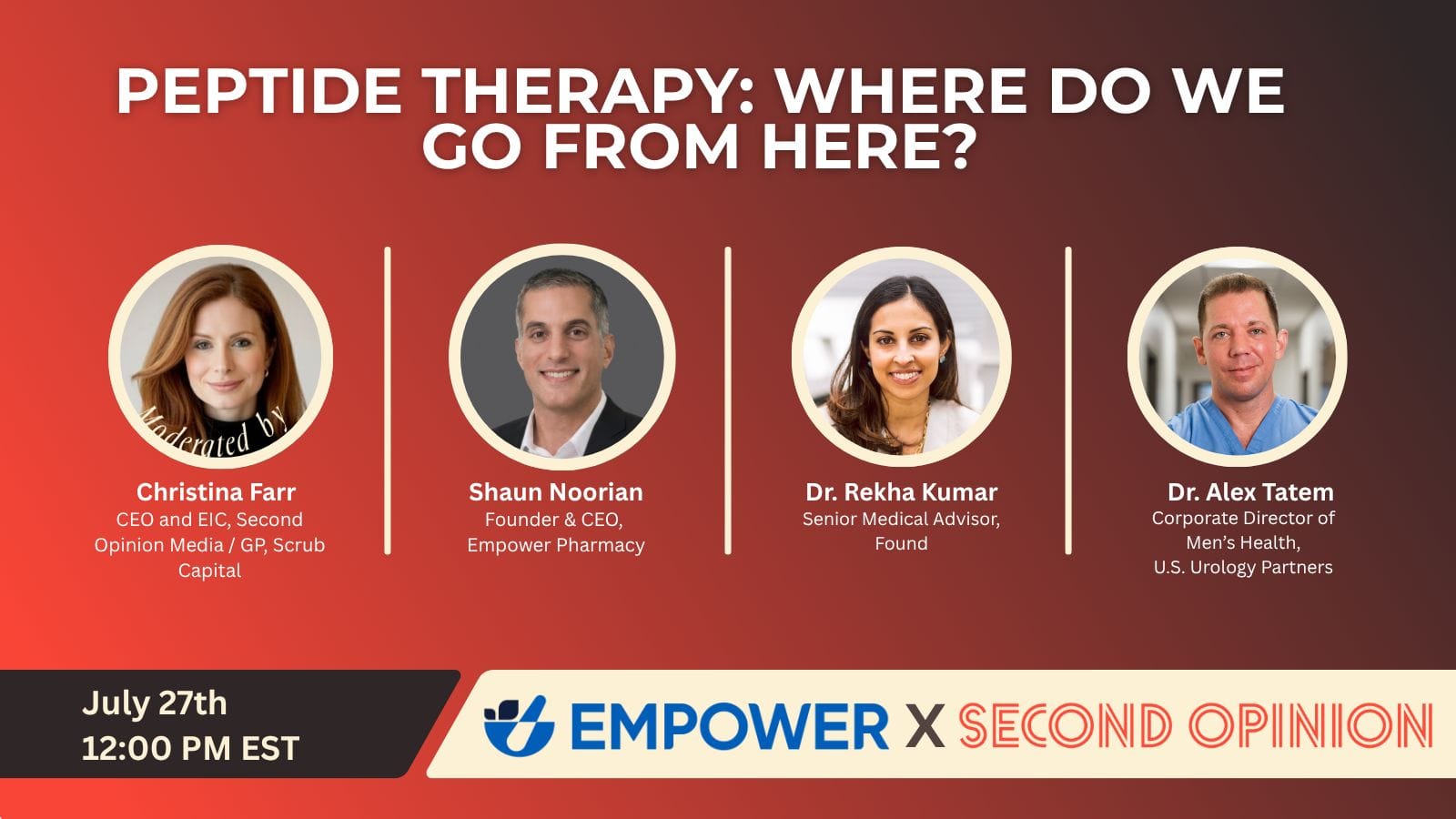
Peptide Therapy: Where Do We Go From Here?
Watch the full webinar Peptide therapies have moved from niche biohacking circles into mainstream medicine, reshaping conversations around weight management, metabolic health,

Not everyone can access the top 1% of physicians. Will AI change that?
Historically, top-tier medical expertise was limited by wealth and geography. As AI reshapes healthcare delivery, a vital question emerges: can it democratize intelligence to give everyone access to the caliber of care typically reserved for the top 1%?

Privacy AI and the Future of HIPAA
Watch the Full Webinar As AI reshapes healthcare and more patient data flows beyond traditional clinical settings, the rules governing privacy, access,

What will AI do for employer healthcare and benefits?
Employer healthcare may be one of the most practical — and overlooked — proving grounds for AI.

Hospitals as the new go-to-market, lessons from the trenches
Watch the Full Webinar Health systems are entering a new frontier, one where innovation isn’t optional, and meaningful change requires creativity,