

Inside the executive shake-up at Epic Systems

Update: Dave Fuhrmann is also among the employees who are soon to leave Epic.
Correction: The article has been updated to correct the titles for Mark Morris and Drew McCombs while they were at Epic.
On Wednesday, we reported that Seth Hain, who was leading AI efforts at electronic medical record behemoth Epic, is leaving the company. His exit follows Epic’s President, Sumit Rana, who said he was leaving the company earlier this month.
There have been a few other recent departures among long tenured employees at the company. In January, Drew McCombs, Epic's formerVP of Nebula Cloud Platform, Cogito Analytics, and AI, who had been at the company for nearly twenty years, left to become chief technology officer and chief information officer at Cylerity, a fintech company that advances cash to providers for unpaid claims. And just this week, another double-decade veteran, Mark Morris, a team leader in technical services, announced his transition out.
Dave Fuhrmann, a research and development senior VP, who works on Epic’s secure health information exchange, Care Everywhere, is soon to leave, according to an anonymous source with knowledge of the changes. His transition has long been planned and Trevor Berceau, who also works in research and development, will take over to manage Care Everywhere, this person said.
Some notes: Hain and Rana were supportive of opening up data within Epic’s health system network, so that doctors could use real-world evidence to improve care. Both were deeply involved in the development of Epic’s health care intelligence AI Curiosity. The foundation model is built on COSMOS, a collaborative data set containing over 300 million patient records from roughly 50,000 clinics.
Hain said one of the things that drew him to working at Epic Systems many years ago was the potential to help patients. “And you could do so in a collaborative, productive way across industries and including academia,” he said on The New England Journal of Medicine’s podcast “AI Grand Rounds” in February.
Under both Rana and Hain, Epic launched its first open-sourced product: a way for validating new AI health products. The AI Trust and Assurance Suite, launched in 2024, gave health systems—even non-Epic health systems—a baseline tool for assessing AI products at a time when most health systems had not even begun to figure out how to test AI.
What’s next: Epic’s annual Users Group Meeting is convening on August 17-20. We’ll be watching to see what kinds of products are center stage this year and what it says about the direction the company is taking next.
If you have information, please reach out to Ruth on Signal at RuthReader.02.
— Ruth
Reserve Your Spot for Upcoming Webinars!
Episode 2 of Rounds is here!
Co-hosted by Christina Farr and Stephanie Davis, this episode dives into the biggest debates shaping digital health right now. Keaton Bedell, co-founder and CEO of Bridge, joins to unpack an exclusive data report on where virtual care is headed next, and Joe DeVivo, President, CEO, and Chairman of Butterfly Network, sits down to talk about the Midjourney partnership that's redefining the future of full-body imaging.


NEWS
Cassidy’s HIPAA update gets a mark-up
Next week, the Senate Health, Education, Labor, and Pensions committee will mark up a suite of health care bills aimed at “improving families’ access to quality, affordable health care.” Among them is Chairman Bill Cassidy’s Health Information Privacy Reform Act, a bill that seeks to expand privacy protection to data in wearables and digital health apps.
CHAI launches effort to help public sector evaluate health AI
The Coalition for Health AI, a non-profit body that supports the responsible use of AI in health care, has launched a new initiative to help state, local, and tribal public health agencies vet AI health products. The initiative, called Public Health Use Case and Learning Scaling Engine, helps select entities develop internal processes to validate and implement AI. OpenAI and Anthropic have donated 10 enterprise licenses with 2,000 seats to the cause.
The digital health startup market is going strong
Rock Health's funding overview for the first half of 2026 found U.S. digital health startups raised $7.4 billion across 244 deals. That is about $1 billion more than last year's first half, on roughly the same deal count. The median deal size rose to $14 million. Nearly half (45%) of the deals were worth $100 million or more, and the top-funded clinical indication was mental health, for the seventh straight year.
Novo is winning the latest battle of the GLP-1 wars
Novo Nordisk's Wegovy pill is far outpacing Eli Lilly's Foundayo, which has captured only about 11% of prescription volume for new weight-loss pills since its April launch. Doctors cite Novo's stronger trial data (16.6% average weight loss versus 12.4%) and Lilly's slower path to reimbursement.
DEALS & LAUNCHES
Sonata, a physician-led preventive healthcare membership, launched out of stealth in New York, San Francisco, and Los Angeles with $7 million in funding from backers including Lux Capital, BoxGroup, and Sunflower Capital. The membership, priced at $2,500 per year, offers a suite of trending tests and biomarkers, including whole-genome sequencing and DNA methylation analysis.
Chai Discovery, an AI drug discovery platform, closed a $400 million Series C led by Index Ventures. The company is now valued at $3.8 billion.
InsideDesk, a dental payment management platform, raised CA$17.7 million ($12.6 million) in a round led by Pender Ventures.
Tytocare, a developer of remote physical examination technology, raised $25 million in a funding round led by Insight Partners.
Frazier Healthcare Partners agreed to acquire MatrixCare, a cloud-based EHR provider for out-of-hospital care settings, from ResMed for $490 million in cash in a deal to be closed by Q3 of 2026. ResMed acquired MatrixCare for $750 million in 2018.
Evidenced, a venture firm built on the thesis that regulation and policy create market openings rather than just risk, closed Fund I at $24 million. Investors include the Rockefeller Foundation, RockCreek Group, and Colibri Equity Ventures.
Neko Health, Daniel Ek's Stockholm-based body-scanning and preventive care company, raised a $700 million Series C at a roughly $7 billion valuation as it prepares to open its first U.S. clinics in New York and other cities this year. The round was co-led by Lightspeed Venture Partners and O.G. Venture Partners. Angel investors include Mark Zuckerberg and Priscilla Chan, Tim Ferriss, and Maria Sharapova.
Corner Health, which empowers nurse practitioners to start and scale their own local primary care practices, raised $32.5 million in seed and Series A financing, led by Oak HC/FT. The company has built a network of more than 70 provider-owned practices across Arizona and Washington.
OpenEvidence launched EvidenceGrade, which scores and visualizes the quality of the evidence behind its answers, exposing that assessment to clinicians in real time. The feature builds on the GRADE framework, the methodology behind Cochrane, the WHO, and most major clinical guidelines.
Anthropic is partnering with global service and engineering company UST by integrating Claude into CarePath, a platform for payers and providers. The AI giant is also partnering with Optum, using AI to reduce administrative burden. The details and timeline of the deals were not disclosed.
HCA Healthcare shares dropped after the hospital operator scaled back 2026 guidance to $28.70 to $30.50 and narrowed revenue to $77 billion to $79.5 billion. The company blamed the change on the rise of uninsured patients, with a growing number of patients losing Affordable Care Act coverage.
Join the Fearless Fractionals
Fractional work continues to appeal to healthcare organizations for the ability to access senior talent without the full-time commitment or agency overhead. Attendees joined from across the country, sharing impressive work spanning product development, commercial strategy, go-to-market optimization, and brand awareness.
Beyond the events, Fearless Fractionals has become an incredible referral network, bringing together a vetted community of top talent across the industry, where members trust each other enough to pass along business and bring one another into the right rooms.
Our group continues to grow. If you'd like to take part, introduce yourself here: REGISTER HERE
LIFERS THIS WEEK!
This week on Lifers, Christina Farr sits down with Dr. Neil Hockstein, Delaware's first Surgeon General, Paul Meyer, CEO and co-founder of Smart Health Network, and Aretha Rochester, who manages prior authorizations from the front desk, for a conversation about whether prior authorization can actually be fixed, not patched.
Delaware is using its Rural Health Transformation award (the state received the fifth highest funding per rural resident) to build shared prior auth rails, rather than backfilling budget cuts.
Hockstein calls most state prior auth legislation "lipstick on the prior authorization pig": shortening a five-day window to three days doesn't fix the plumbing underneath.
Meyer's model is a blind router: prior auth requests travel in sealed envelopes that the hub cannot open, and the patient is the only party holding a key to their own request.
The tech was proven five years ago. The Da Vinci pilot between Regence and MultiCare showed real-time prior auth works, yet Regence has connected with just five health systems since.
CMS-0057 requires payers to support electronic prior auth by January 1, but Meyer warns the default outcome is simply another generation of portals; Rochester's team already juggles 17.
The episode includes audio from a real peer-to-peer denial call, in which the reviewer admits the plan had no clinical information attached to the request it denied.
Thanks to Smart Health Network who facilitated this conversation. Smart Health Network is a neutral infrastructure for health transactions between providers, payers, and patients — connect once, transact with all. Smart Health Network — Cut Paperwork, Not Care.
Four Questions with Arvind Kadaba
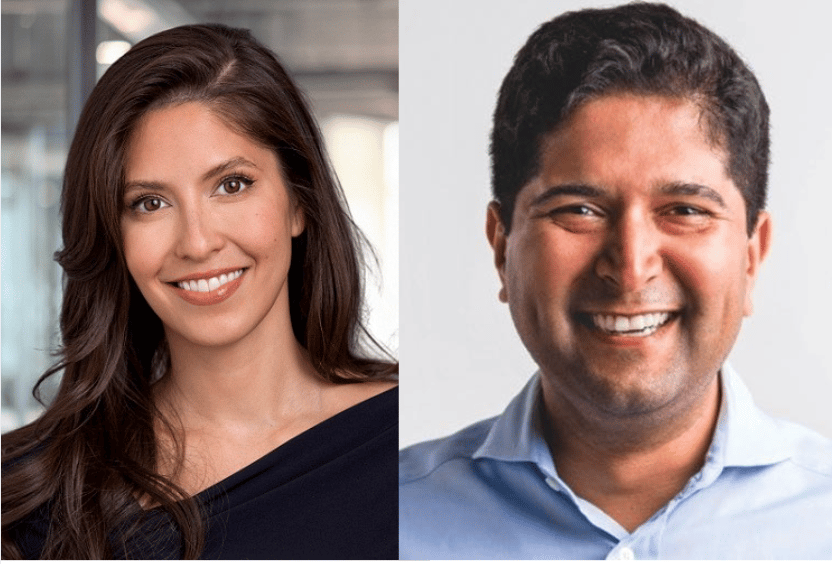
Interviewed by Second Opinion regular contributor Stephanie Davis,sat down with Aidoc CEO Arvind Kadaba following the close of their recent $150M Series E round to talk bubbles, burn rates, and the ghost of digital health’s past.
Stephanie Davis: You’ve got the unique perspective of having raised in a bubble before, as you helped both Cedar and Parsley get through their Series C’s during the pandemic digital health boom. Now you’re raising for an AI company in a frothier AI environment. How was this similar or different? What measures did you take, like valuation discipline, to make sure you didn’t regret this?
Arvind Kadaba: Valuation discipline matters enormously, and so does picking the right partner. You’re looking for someone who is supporting the company’s arc vs someone underwriting the business as a purely financial exercise.
As a part of our communication to the investor community, we highlighted that (1) we expected a reasonable valuation, and (2) we had metrics that supported it. We had to make sure investors were aligned with this mindset.
Stephanie Davis: In the digital health bubble, a lot of companies raised on narrative and got punished when the market corrected. What specifically did you do differently this time to make sure Aidoc wasn't that company?
Arvind Kadaba: The execution piece is very different this time around-- we made sure we already had proof points, including nearly 2,000 hospitals and 15 million patient cases per quarter ahead of the raise. There's a scale and level of impact to the business that's not at the same level of infancy as many other AI businesses, given the nascency of the AI industry.
We also didn’t feel pressure around the AI label. If you’re a large fund and you believe that healthcare AI is going to ultimately be an important and defensible vertical, there just aren’t that many companies with our level of market traction. There is a lot of scarcity value associated with that, and that’s a real dynamic separate from hype.
Stephanie Davis: So why does it keep happening?
Arvind Kadaba: Game theory. Think about my perspective as CFO: My number one job is to make sure the company doesn't run out of money, because if we run out of it, the equity value is zero.
If my competitor is raising at an outsized valuation and has outsized access to capital, they can out-compete me: They can get more mindshare, they can get more customers via paid search and social. And in many technology markets, it's a winner-take-all or winner-take-most market.
Take Uber versus Lyft. Uber raised more, burned more, and won; they successfully used capital as a competitive advantage. The late-stage investors still made money because Uber created and captured an enormous market.
Stephanie Davis: What advice would you give to a CFO at an AI company who hasn't lived through a bubble before?
Arvind Kadaba: Three things. First, be very thoughtful about who’s on your cap table—it matters more than people realize, especially during these boom-bust cycles.
Second, understand that as you raise more rounds, your investors will have materially different incentives from each other. Your Series A investor may be happy with going into steady state, while your Series D investor wants the company to triple from here. The creation of a structural misalignment across your boardroom can serve to be a massive distraction, especially if you’re operating in a competitive and rapidly evolving end market.
Third, and this is a really dangerous one: when you raise a lot of capital, you have a lot of capital, and you often feel pressure to deploy it. Capital allocation decisions are very hard to walk back—you can’t let all that money burn a hole in your pocket.
About Arvind Kadaba
Arvind is the CFO of Aidoc, the leading clinical AI platform, which, through the largest portfolio of FDA-cleared image recognition AI algorithms, helps triage, diagnose and coordinate care at hundreds of health systems and for millions of patients around the world. Prior to Aidoc, Arvind led finance teams at two other healthtech startups, Cedar and Parsley Health. He also held various roles at Morgan Stanley and Citadel.
About Stephanie Davis
(Second Opinion - Contributor)
Stephanie Davis is a fractional healthcare technology leader, CFA charterholder, and former top-ranked equity research analyst with over 15 years of experience. She is a regular contributor to Second Opinion. Currently advising healthcare firms through business inflections like IPOs and acquisitions, she previously held leadership roles at SVB Securities, Barclays, Citibank, and J.P. Morgan. She holds a B.A. from Columbia University and is a frequent media commentator on healthcare delivery and economics.
Upcoming Sessions
Live conversations with the people shaping healthcare.

Verifying AI in Medicine: Is Healthcare AI Actually Ready for Deployment?
Is AI ready for real-world clinical care? Dr. Zak Kohane and Protege’s Engy Ziedan debate what it takes to safely trust AI in diagnosis and treatment, from benchmark performance and clinical evidence to whether we’re holding AI to a higher standard than humans.

Why Are Hospitals Hiring Chief AI Officers?
As AI moves from pilots into day-to-day healthcare operations, health systems are having to decide who should actually own the


Where are AI Agents Actually Working in Healthcare, and Why?
While the healthcare industry remains locked in a high-level debate over the theoretical potential of artificial intelligence, a select group of

Top Employers Share What Healthcare Startups Need to Know in 2026
As enterprise health purchasers face volatile medical cost trends and tightening operational margins, the standard vendor pitch of "improved clinical efficiency&

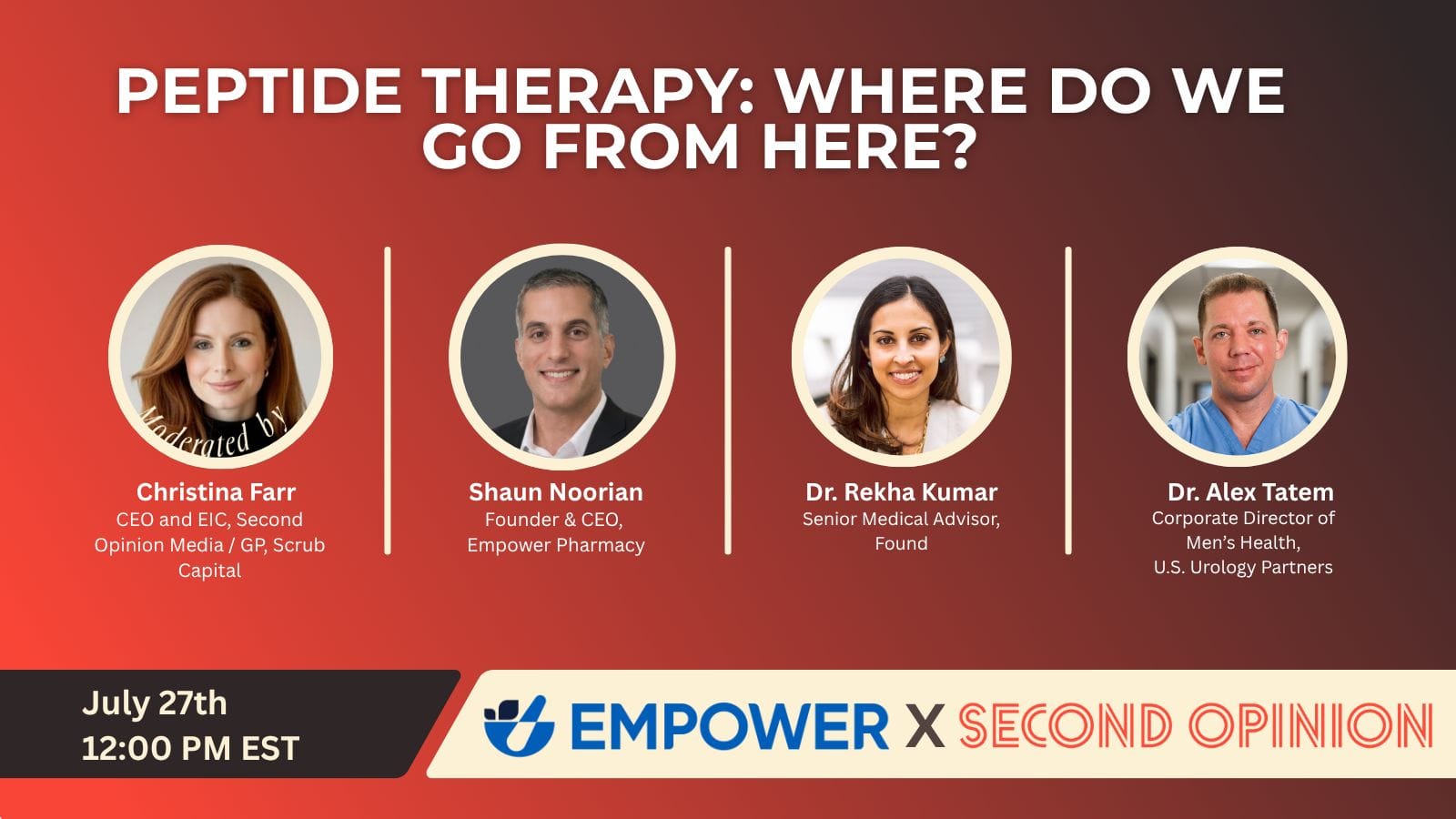
Peptide Therapy: Where Do We Go From Here?
Watch the full webinar Peptide therapies have moved from niche biohacking circles into mainstream medicine, reshaping conversations around weight management, metabolic health,

Not everyone can access the top 1% of physicians. Will AI change that?
Historically, top-tier medical expertise was limited by wealth and geography. As AI reshapes healthcare delivery, a vital question emerges: can it democratize intelligence to give everyone access to the caliber of care typically reserved for the top 1%?

Privacy AI and the Future of HIPAA
Watch the Full Webinar As AI reshapes healthcare and more patient data flows beyond traditional clinical settings, the rules governing privacy, access,

What will AI do for employer healthcare and benefits?
Employer healthcare may be one of the most practical — and overlooked — proving grounds for AI.

Hospitals as the new go-to-market, lessons from the trenches
Watch the Full Webinar Health systems are entering a new frontier, one where innovation isn’t optional, and meaningful change requires creativity,