

“Mom’s New Plus-One: An AI Pet?”Why this growth investor is bullish on robots for seniors in the home.
Meghan FitzGerald is a geriatric nurse practitioner, healthcare investor, and healthcare policy professor who studies and invests in the future of aging and care delivery.
By now, you’ve probably seen the news that Washington State is the first in the nation to authorize a statewide reimbursement code for a companion AI robot. This is a significant moment—an opportunity I’ve envisioned for years now taking shape.
I wear a few hats in my professional life. I’m an investor, former executive and board member, and a licensed acute geriatric nurse practitioner. At age sixteen, I was a live-in caregiver for my grandmother, Oma, who had Alzheimer’s—an experience that profoundly shaped my clinical path and interests in senior care.
We are at the precipice of something very big, and we’re not paying enough attention. I’ve been on a three-year journey examining how robotics and AI are colliding with the growing tsunami of chronic disease in an aging population.
Seniors benefit from interaction, touch, and comfort - especially in moments of need or when alone. Sometimes it’s a hand. Sometimes it’s a familiar object. Soon, I believe it may be a fluffy robot.
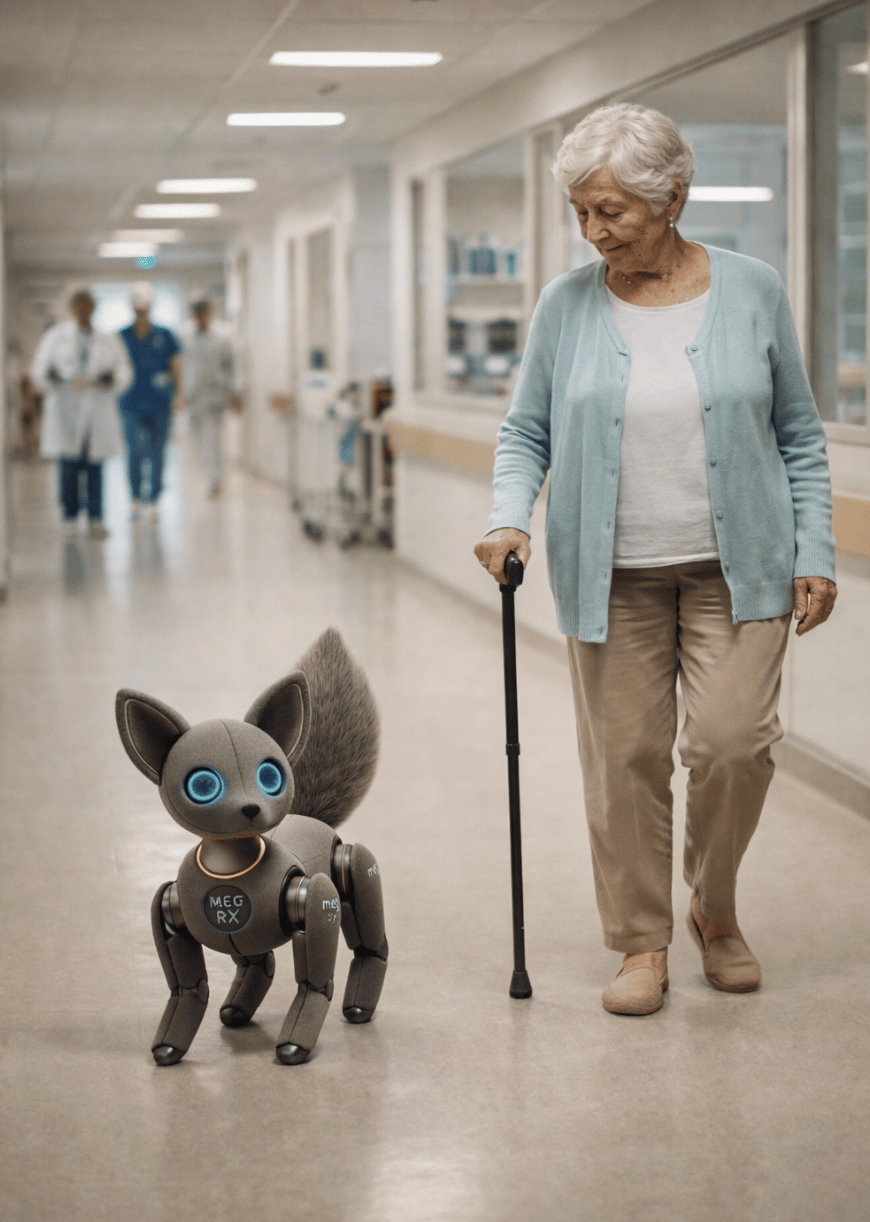
The US healthcare system is gliding into a clinical world where intelligence is ambient—and soon, embodied. Not as cold machines, but as adjunct companions: a voice, a presence, perhaps something that looks and behaves like a pet. But a functional pet that can provide a variety of different utilities, such as emergency alerts and medication reminders.
Throughout my career working in long-term care settings, providers have relied on simple tools to help manage loneliness and cognitive decline—games, toys, tactile objects, even the occasional ugly doll—anything seniors can touch, hold, and engage with. However, the technological solution for seniors will look less like a scary Terminator or fussy C-3PO and more symbolic to Wilson, Tom Hanks’s trusted volleyball companion in Cast Away.
The need is enormous. Aside from cognitive challenges, loneliness is a baseline experience for a third of aging adults, resulting in three times the rate of higher death and a 68% higher hospitalization risk. As caregiver shortages deepen and more seniors spend their final decade alone, AI-powered companion pets may become a simple but powerful presence—sitting beside them, listening, remembering, and offering emotional support.
`Upcoming Sessions
Live conversations with the people shaping healthcare.

Verifying AI in Medicine: Is Healthcare AI Actually Ready for Deployment?
Is AI ready for real-world clinical care? Dr. Zak Kohane and Protege’s Engy Ziedan debate what it takes to safely trust AI in diagnosis and treatment, from benchmark performance and clinical evidence to whether we’re holding AI to a higher standard than humans.

Why Are Hospitals Hiring Chief AI Officers?
As AI moves from pilots into day-to-day healthcare operations, health systems are having to decide who should actually own the


Where are AI Agents Actually Working in Healthcare, and Why?
While the healthcare industry remains locked in a high-level debate over the theoretical potential of artificial intelligence, a select group of

Top Employers Share What Healthcare Startups Need to Know in 2026
As enterprise health purchasers face volatile medical cost trends and tightening operational margins, the standard vendor pitch of "improved clinical efficiency&

Peptide Therapy: Where Do We Go From Here?
Watch the full webinar Peptide therapies have moved from niche biohacking circles into mainstream medicine, reshaping conversations around weight management, metabolic health,

Not everyone can access the top 1% of physicians. Will AI change that?
Historically, top-tier medical expertise was limited by wealth and geography. As AI reshapes healthcare delivery, a vital question emerges: can it democratize intelligence to give everyone access to the caliber of care typically reserved for the top 1%?

Privacy AI and the Future of HIPAA
Watch the Full Webinar As AI reshapes healthcare and more patient data flows beyond traditional clinical settings, the rules governing privacy, access,

What will AI do for employer healthcare and benefits?
Employer healthcare may be one of the most practical — and overlooked — proving grounds for AI.

Hospitals as the new go-to-market, lessons from the trenches
Watch the Full Webinar Health systems are entering a new frontier, one where innovation isn’t optional, and meaningful change requires creativity,