

The AI prescription


This week, the state of Utah gave its blessing to a slate of five new pilots to its health AI regulatory sandbox program. As I told you last week, the state also debuted a roster of independent third-party evaluators that pilot companies will have to work with to provide supporting evidence for their programs.
New pilots include Expect Fitness pelvic floor physical therapy; August AI's prescription renewals for maintenance medications; and Nolla Health's prescription for topical acne treatments. Both Intermountain and University of Utah signed master agreements that outline the terms under which they can propose AI pilots that run within their health systems.
The third-party evaluators are Vega Health, Glacis Technologies, Clarion AI Partners, mpathic AI, Stanford Clinical Excellence Research Center, and the Coalition for Health AI. These companies will help pilot participants generate evidence that proves their programs are functioning optimally.
While including independent evaluators to review the AI seems like an important component of the sandbox, there seems to be less focus on evaluating the practice of medicine itself. Earlier this year, the Utah Medical Licensing Board complained that the Utah Department of Commerce should have consulted the board before greenlighting AI prescription renewals. Since then, the state has invited it to join a working group that supports the Department of Commerce's AI policymaking.
Still, one of the new pilots raises questions about whether Utah is approving these pilots based on their utility or their level of risk.
Dermatologist and DermFlo founder Vasmi Varra pointed out to me that Nolla Health's pilot for AI-driven acne prescriptions only offers topical treatments, which is a limited way to treat the condition. Oral medications are often a first-line choice for treating moderate to severe acne, he said.
“You wouldn't put a stage four cancer patient in an AI pilot where the only options are treatments for stage one,” he said. It's a bombastic example, but it highlights a critical question: who is the Nolla Health pilot for?
Nolla Health's pilot is relatively low risk, but Varra questions the utility and cost for patients.
He used the Nolla Health platform to see how it would diagnose his normal skin. It recommended he pay $60 for a regimen of topical treatments that are barely over the threshold for prescription.
“The actual treatment that should be given to someone like me is either nothing, or a topical retinoid, maybe,” he said. He also noted that the compounded treatments the platform recommended have over-the-counter alternatives that are pretty easy to access.
What do you think of the latest slate of pilots to hit the Utah AI sandbox? I'd love to hear your thoughts.
Now onto the news.
—Ruth
Upcoming Sessions
Live conversations with the people shaping healthcare.

Is It Finally the Moment for Alternative Plan Design?
Employers are under growing pressure to control healthcare costs while improving access, outcomes, and the member experience. That has renewed interest in

Type 2 Diabetes & Cardiometabolic Care: Wearables, AI & GLP-1s
The rise of wearables, GLP-1s, and AI is reshaping treatment for Type 2 diabetes, weight loss, and metabolic disease. We have

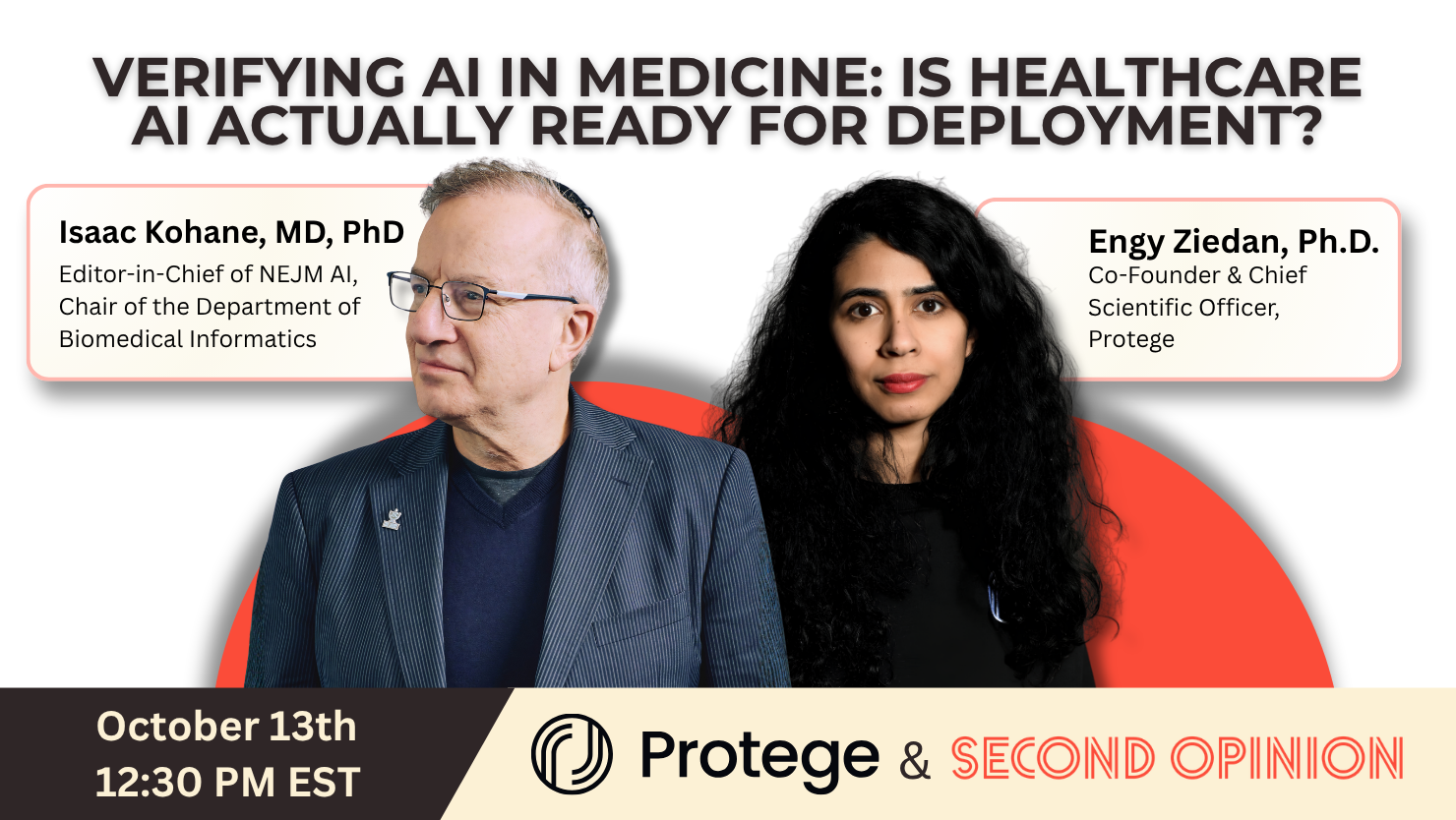
Verifying AI in Medicine: Is Healthcare AI Actually Ready for Deployment?
Is AI ready for real-world clinical care? Dr. Zak Kohane and Protege’s Engy Ziedan debate what it takes to safely trust AI in diagnosis and treatment, from benchmark performance and clinical evidence to whether we’re holding AI to a higher standard than humans.

Why Are Hospitals Hiring Chief AI Officers?
As AI moves from pilots into day-to-day healthcare operations, health systems are having to decide who should actually own the


Where are AI Agents Actually Working in Healthcare, and Why?
While the healthcare industry remains locked in a high-level debate over the theoretical potential of artificial intelligence, a select group of

Top Employers Share What Healthcare Startups Need to Know in 2026
As enterprise health purchasers face volatile medical cost trends and tightening operational margins, the standard vendor pitch of "improved clinical efficiency&

Peptide Therapy: Where Do We Go From Here?
Watch the full webinar Peptide therapies have moved from niche biohacking circles into mainstream medicine, reshaping conversations around weight management, metabolic health,

Not everyone can access the top 1% of physicians. Will AI change that?
Historically, top-tier medical expertise was limited by wealth and geography. As AI reshapes healthcare delivery, a vital question emerges: can it democratize intelligence to give everyone access to the caliber of care typically reserved for the top 1%?

Privacy AI and the Future of HIPAA
Watch the Full Webinar As AI reshapes healthcare and more patient data flows beyond traditional clinical settings, the rules governing privacy, access,