

Walmart is shutting down its clinics and telehealth service

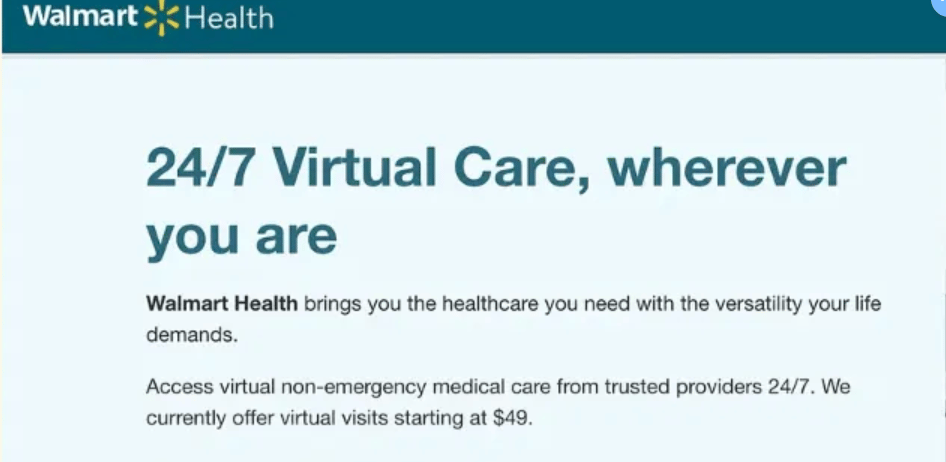
By now, you’ve probably seen the news that Walmart is closing its health centers and telehealth unit. This comes just a few days after Optum allegedly shuttered its telehealth business, which I covered. Walmart confirmed the news, but said it will keep its network of pharmacies and vision centers.
So what is going on here? Walmart seemed committed to health care, and has been investing it in for over a decade through acquisitions, investments and key hires.
Firstly, whenever we see any news that Big Tech or Big Retail is exiting health care, I see a lot of tweets and posts about how “health care is hard.” We need to stop saying things like this. Health care is indeed hard, but it is intentionally so because our incumbents want to keep it that way. It is not a good thing for patients that a giant retailer with a presence in some of the most underserved parts of the country, and a mission to provide affordable care, had to shut down. And the stated reasons? Escalating costs and reimbursement challenges, per Bloomberg. Relationships like this one with UHC probably didn’t help. As Aledade’s Farzad Mostashari noted, “Walmart is on one the wrong side of a huge information asymmetry in that relationship, and probably on the wrong side of the economics as well.”
`Upcoming Sessions
Live conversations with the people shaping healthcare.

Verifying AI in Medicine: Is Healthcare AI Actually Ready for Deployment?
Is AI ready for real-world clinical care? Dr. Zak Kohane and Protege’s Engy Ziedan debate what it takes to safely trust AI in diagnosis and treatment, from benchmark performance and clinical evidence to whether we’re holding AI to a higher standard than humans.

Why Are Hospitals Hiring Chief AI Officers?
As AI moves from pilots into day-to-day healthcare operations, health systems are having to decide who should actually own the


Where are AI Agents Actually Working in Healthcare, and Why?
While the healthcare industry remains locked in a high-level debate over the theoretical potential of artificial intelligence, a select group of

Top Employers Share What Healthcare Startups Need to Know in 2026
As enterprise health purchasers face volatile medical cost trends and tightening operational margins, the standard vendor pitch of "improved clinical efficiency&

Peptide Therapy: Where Do We Go From Here?
Watch the full webinar Peptide therapies have moved from niche biohacking circles into mainstream medicine, reshaping conversations around weight management, metabolic health,

Not everyone can access the top 1% of physicians. Will AI change that?
Historically, top-tier medical expertise was limited by wealth and geography. As AI reshapes healthcare delivery, a vital question emerges: can it democratize intelligence to give everyone access to the caliber of care typically reserved for the top 1%?

Privacy AI and the Future of HIPAA
Watch the Full Webinar As AI reshapes healthcare and more patient data flows beyond traditional clinical settings, the rules governing privacy, access,

What will AI do for employer healthcare and benefits?
Employer healthcare may be one of the most practical — and overlooked — proving grounds for AI.

Hospitals as the new go-to-market, lessons from the trenches
Watch the Full Webinar Health systems are entering a new frontier, one where innovation isn’t optional, and meaningful change requires creativity,