

If AI was supposed to replace radiologists, why are they so in demand?

Many of the top thinkers in the AI space from Geoffrey Hinton to Vinod Khosla have theorized that AI will replace radiologists. But UCSF Chair of the Department of Medicine Dr. Bob Wachter told us in a recent podcast that his health system can’t hire enough radiologists. He's far from the only health system leader sharing that sentiment.
Why the disconnect?
Ten years ago, if you went to the hospital complaining of a recent pain in the lower right half of your body and a fever, some doctors may have taken you directly to the operating room for an appendectomy without giving you a CAT scan, Andrew Ibrahim, a practicing surgeon and chief clinical officer for AI care coordination company Viz.ai told me. At the time, it was common for some 15% to 25% of patients diagnosed with appendicitis to go in for surgery, only to find out it wasn’t necessary, according to a 2013 paper in Advances in Surgery.
The prevailing belief was that the risks of potential appendicitis were greater than those of surgery. The 2013 paper, authored by two researchers at the University of Washington, argued against that idea. They said that advanced imaging had already begun to lower false positive rates for appendicitis. The paper encouraged more surgeons to embrace advanced imaging.
Three years later, the godfather of AI, Hinton, famously articulated that medical schools should stop training radiologists. That was because deep learning AI would be able to read scans as well or better than they could. In 2022, he told me via email: “The transition is slightly slower than I hoped but well on track for AI to be better than most radiologists at interpreting many different types of medical images by 2026.”
In our email exchange, he said he never thought AI would replace radiologists entirely, just that the technology should be allowed to read scans for them. Whatever his prediction, radiologists are in more demand than ever.
So what happened?
In this article:
- What radiologists really think about AI
- Whether radiology remains an in-demand specialty for residents
- What that tells us about how AI will impact other aspects of medicine
- Where AI will be most useful in healthcare next
|
Upcoming Sessions
Live conversations with the people shaping healthcare.

Office Hours
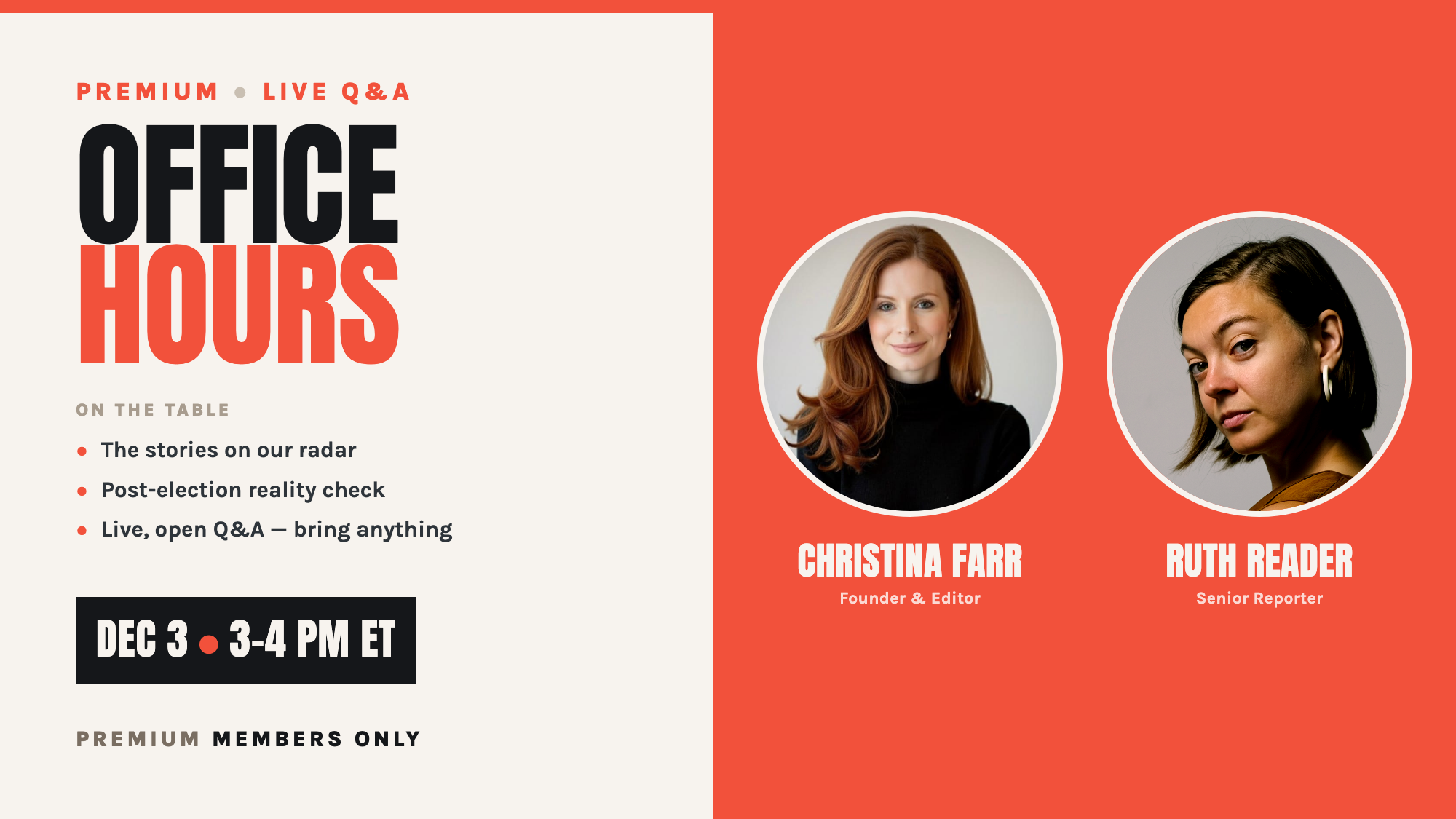
A live Q&A with Christina Farr and Ruth Reader, exclusively for Second Opinion Premium members. Thursday, December 3, 3–4 p.m. ET / noon–1 p.m. PT.

AMA with Doximity CEO Jeff Tangney
Join Doximity CEO Jeff Tangney for a live Q&A on where clinicians are finding value with AI, how Doximity has evolved, and building a company from zero to IPO.

The Shift Left & the Impact of the Midterms on Healthcare
Democrats just took both chambers. Aneesh Chopra, Christopher Kerns and Mike Desjadon join Ruth Reader and Christina Farr live to talk through what they'll try to do on healthcare — and what's actually achievable under a Republican White House.

Is It Finally the Moment for Alternative Health Plans?
Register Here Employers are under growing pressure to control healthcare costs while improving access, outcomes, and the member experience. That has renewed

Type 2 Diabetes & Cardiometabolic Care: Wearables, AI & GLP-1s
Register Here The rise of wearables, GLP-1s, and AI is reshaping treatment for Type 2 diabetes, weight loss, and metabolic disease.

Verifying AI in Medicine: Is Healthcare AI Actually Ready for Deployment?
Is AI ready for real-world clinical care? Dr. Zak Kohane and Protege’s Engy Ziedan debate what it takes to safely trust AI in diagnosis and treatment, from benchmark performance and clinical evidence to whether we’re holding AI to a higher standard than humans.

Why Are Hospitals Hiring Chief AI Officers?
As AI moves from pilots into day-to-day healthcare operations, health systems are having to decide who should actually own the


Where are AI Agents Actually Working in Healthcare, and Why?
While the healthcare industry remains locked in a high-level debate over the theoretical potential of artificial intelligence, a select group of

Top Employers Share What Healthcare Startups Need to Know in 2026
As enterprise health purchasers face volatile medical cost trends and tightening operational margins, the standard vendor pitch of "improved clinical efficiency&