

How to Build a Successful Clinician Advisory Board


For years, clinician advisory boards were largely exercises in prestige: recruit a few well-known physicians, add their names to the company website, schedule a quarterly meeting, and call it a day.
Today, the most successful healthcare companies are treating clinicians less like advisors and more like co-builders. They involve clinicians from the earliest stages to shape strategy, challenge assumptions, and ensure the product fits with how clinicians actually work.
Take Jiro Health, which assembled a physician advisory board before writing a single line of code. The company is building a "practice intelligence" platform that gives clinicians visibility into the clinical, operational, and financial performance of their own practice using real-world data. Cofounders Greg Field and Mike DiNorscio built and sold a healthcare analytics company to IQVIA in 2022, where they saw firsthand how much valuable data clinicians generate but how little of it they ever get to see themselves.
"We wanted people who understood the realities of clinical practice and could pressure test our assumptions early," DiNorscio told us. "Too many healthcare products are built for physicians without physicians."
However, many companies are still building products for clinicians without hiring any. Some founders view their outsider status as an advantage but that strategy has mixed results in the long-run because healthcare places such a premium on clinical expertise. The experts we spoke with argued that companies that prioritize clinicians, through advisors, full-time hires or both, often gain an edge.
"If you're building in healthcare, you need clinical input, full stop," says Rajesh Aggarwal, MD, a surgeon and former health system executive who now advises digital health companies.
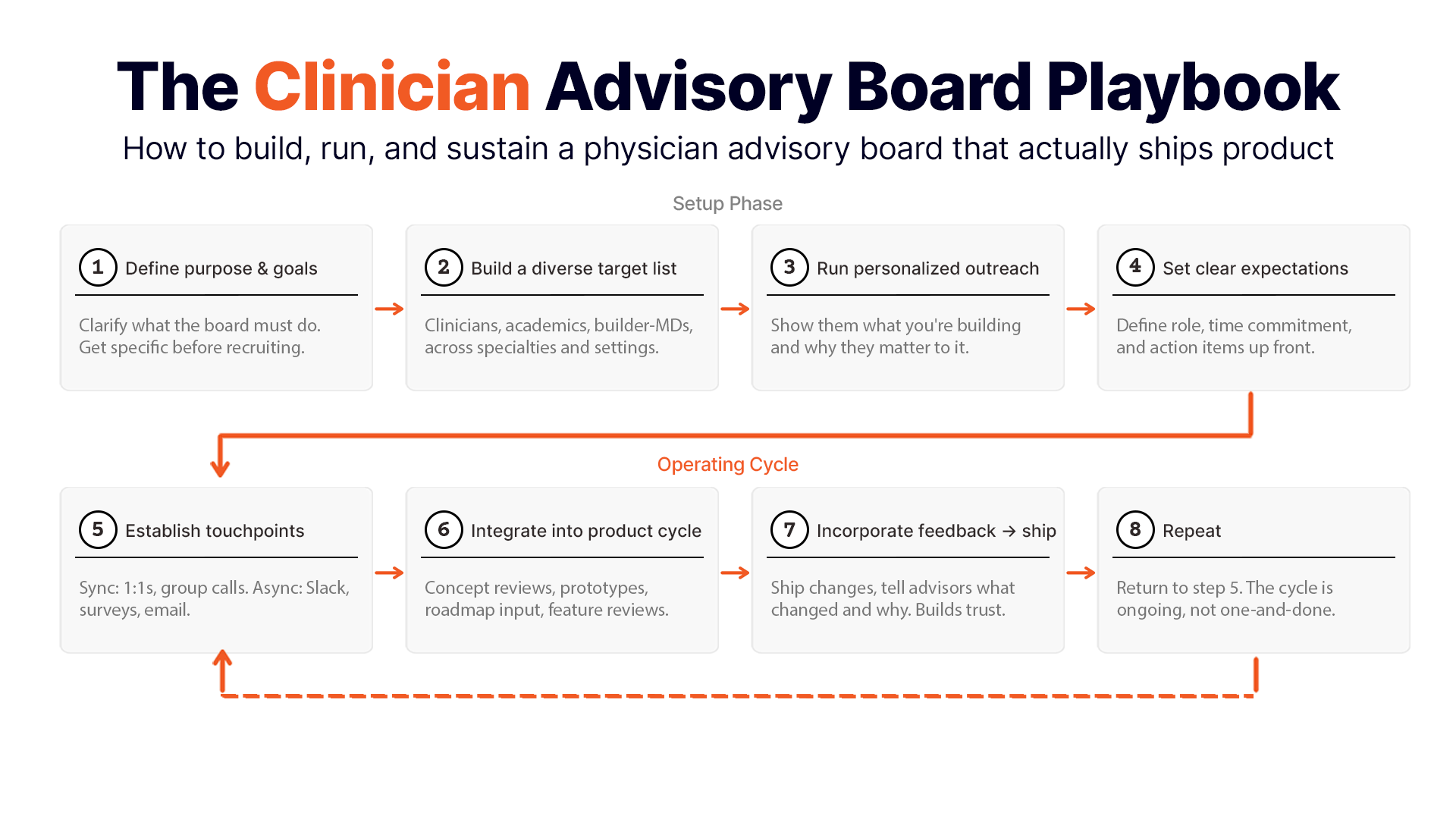
Get clear on what the board will do
When Aggarwal helps companies assemble a clinician advisory board (CAB), he starts with a simple question: What is the board supposed to accomplish? Some companies need full-time clinical hires. Others should recruit advisors. Many can benefit from both, but getting the board composition right is often more challenging.
Understanding what founders expect advisors to contribute helps clarify the role and makes it easier to recruit the right people.
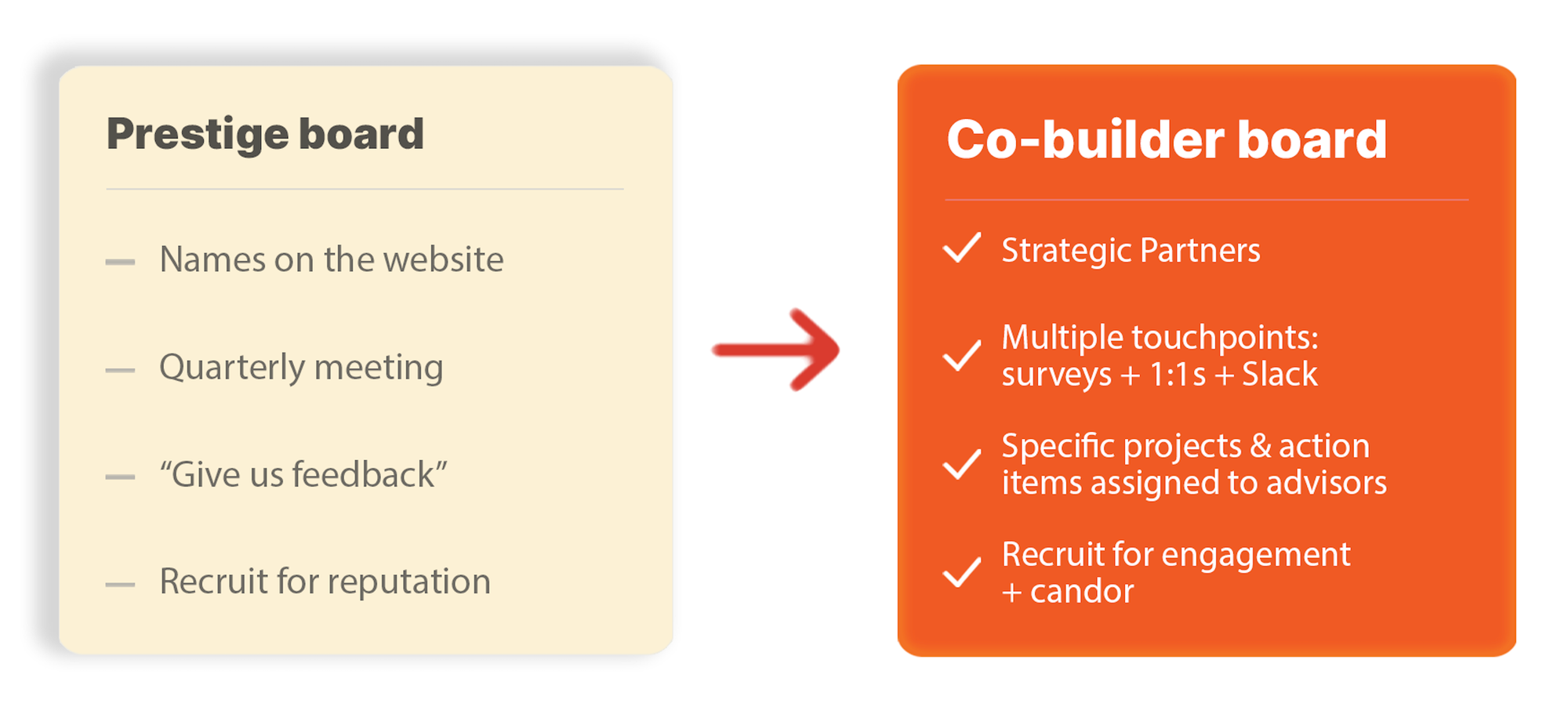
For Rebecca Mitchell, MD, managing partner at Scrub Capital (where Chrissy is also a GP), the strongest advisory boards function as a company’s clinical brain trust. This is particularly important for companies building tools that impact how clinicians work. "The best physician advisory boards are strategic partners," she says. "They help shape thinking within their area of expertise and connect the company to a broader network."
That perspective matters because advisory boards help product teams design around the real world experience of clinicians. Companies may build technically impressive products, but clinicians can quickly identify whether they will fit into real-world workflows.
As Steve Feldman, MD, a leading dermatologist and Jiro advisor, puts it, clinicians are ultimately the ones who have to live with and adopt new technologies. "I’ve seen pharmaceutical companies develop patient apps that seemed promising on paper," Feldman says. "But they didn’t fit into people’s day-to-day lives." Founders who don’t consult clinicians risk spending months building solutions that fail in practice.
The strongest boards do more than provide occasional feedback. Mitchell compares them to long-term partners who contribute throughout the product lifecycle by helping companies understand workflows, evaluate product decisions, navigate emerging trends, and build credibility within the medical community.
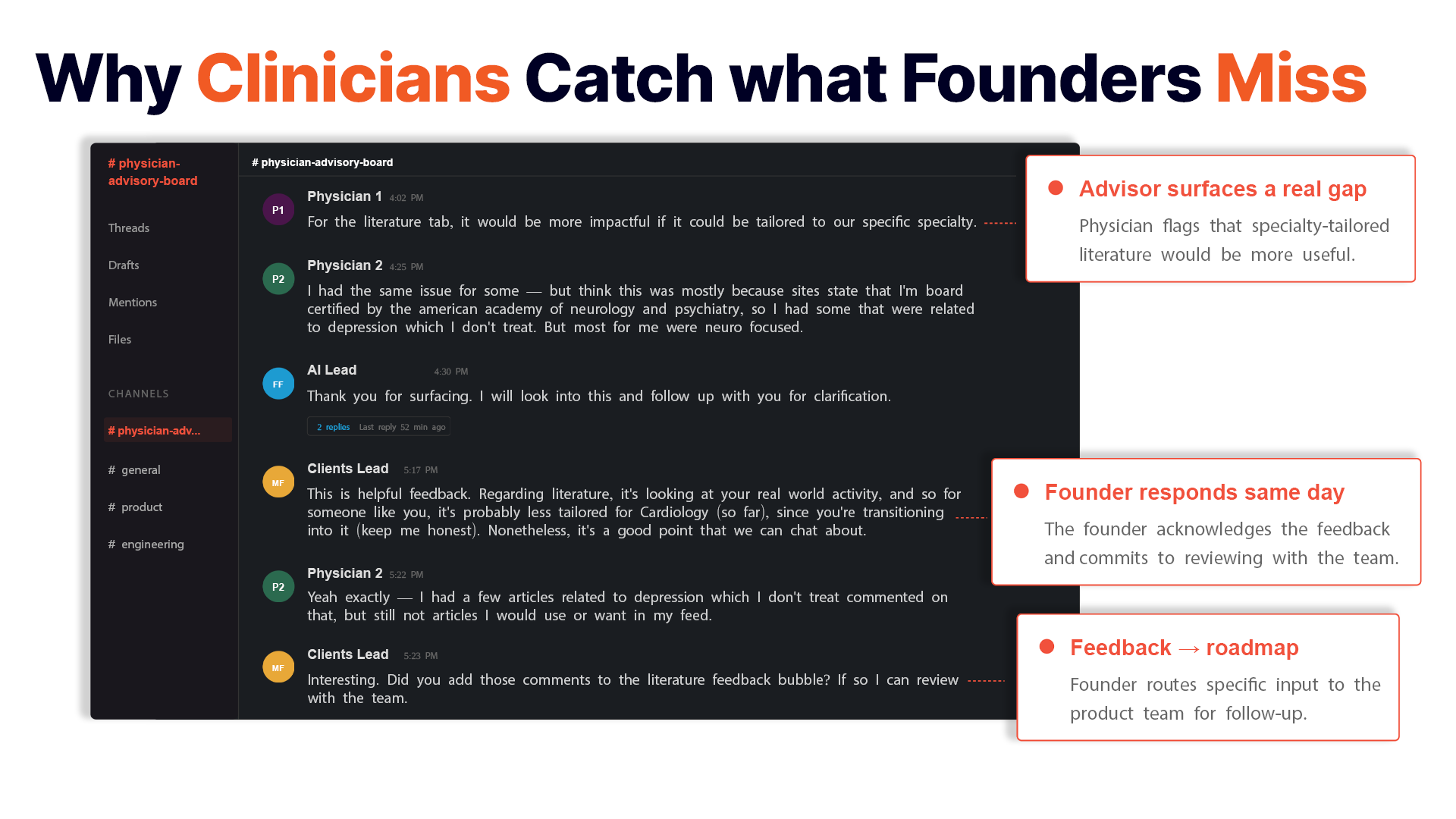
She also cautions against using advisory boards as a substitute for customer discovery. "Understanding customer needs requires talking to hundreds of people and identifying patterns," she says. "You can't outsource that to a handful of advisors."
Who belongs on the board?
It's tempting to focus exclusively on senior clinicians who can open doors. Aggarwal believes that's too narrow. "Introductions are typically the result of a strong advisory relationship and not the reason for one," he says.
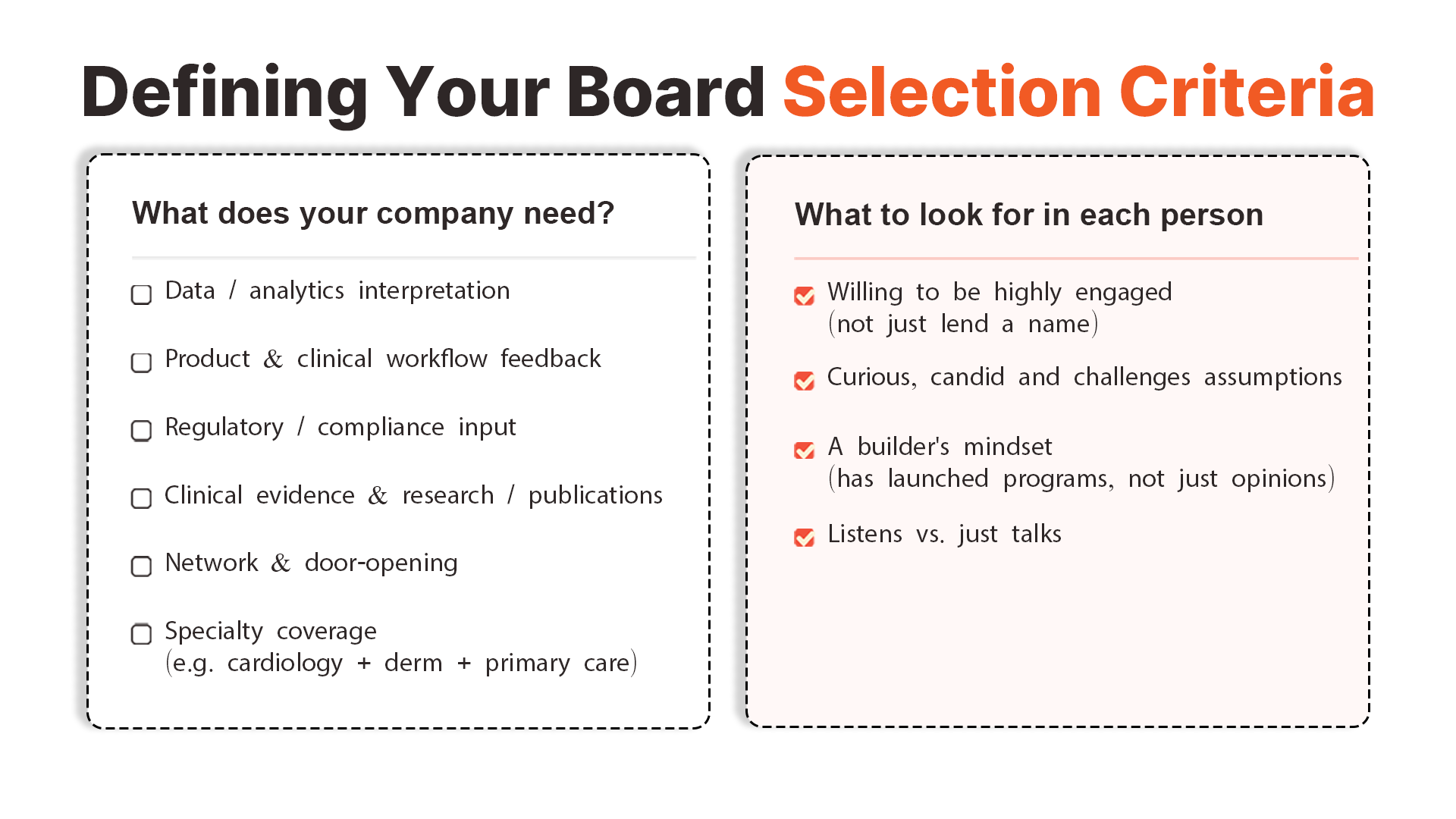
Just as important is finding people who are curious, engaged, and genuinely interested in helping the company succeed.
Most boards benefit from a mix of perspectives. Academic physicians and researchers can help generate evidence, publish findings, and raise a company’s profile, whereas practicing clinicians can pressure test product experience, and refine the ideal customer profile.
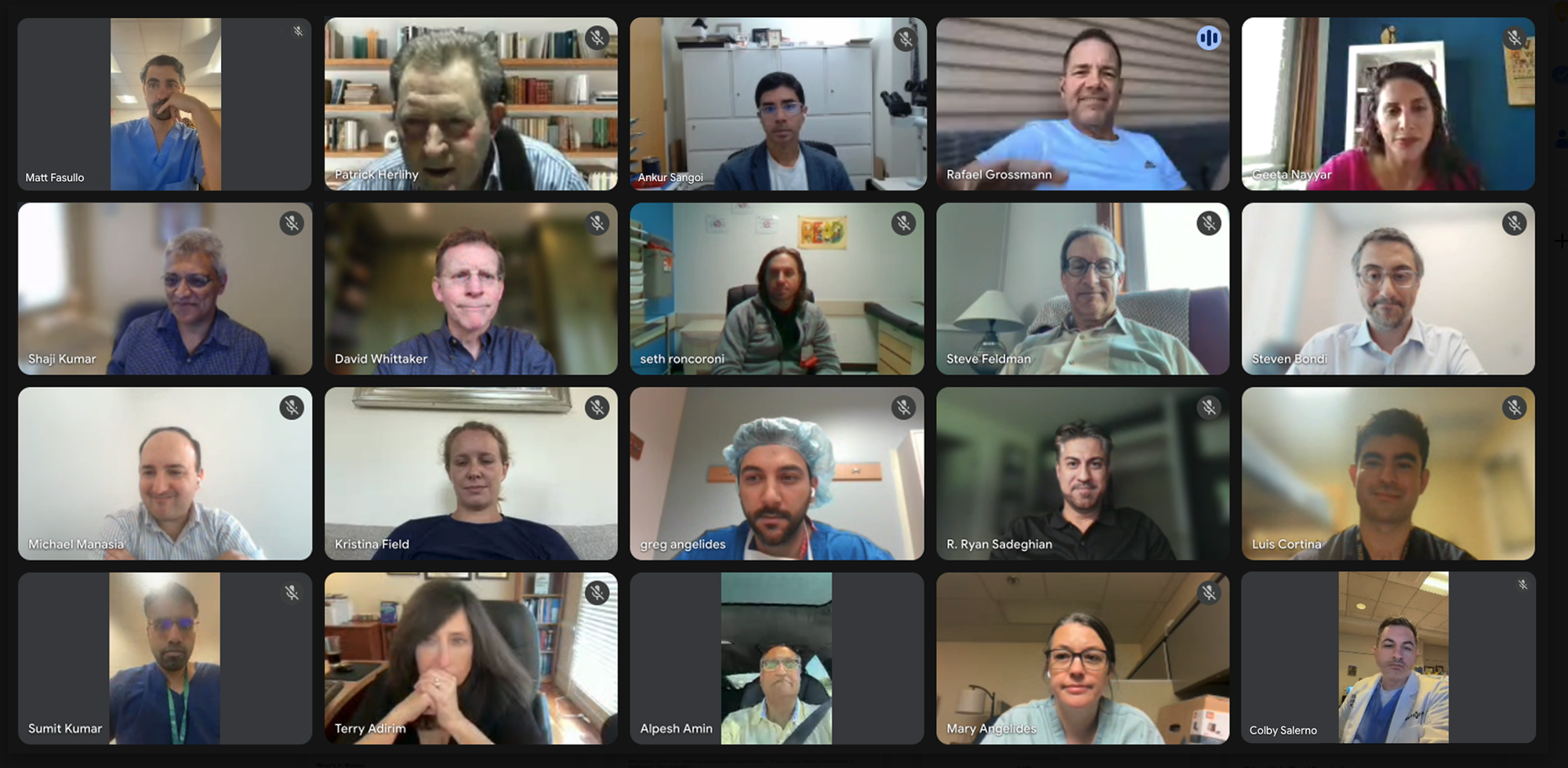
Mike DiNorscio of Jiro points to the physician advisory board created by Dr. Osama Hashmi, CEO of Impiricus. The company’s free product, DocUpdate is used by physicians for e-prescribing, translation, and other workflows. Rather than organizing the board solely around specialty or practice setting, Hashmi told DiNorscio he built a board that spans every major therapeutic area and includes physicians from academic medical centers and community practices, as well as trainees and emerging key opinion leaders.
Other benefits that a strong physician advisory board can unlock include research and new product ideas that are grounded in customer needs.
"Having me on the board means I can help turn data into research," says Feldman. "That's good for patients, and it also helps increase the company's visibility."
Mitchell believes some of the most valuable advisors are builders. "There are plenty of people who know the facts, know the right people, and can speak brilliantly," she says. "But building something is a muscle."
That doesn't mean advisors need to have founded companies. Leaders who have launched programs within health systems, led innovation initiatives, or built major research efforts often bring the same operational mindset.
Founders should also think carefully about their first few recruits. Strong advisors tend to attract other strong advisors, making those initial hires especially important. Both Mitchell and Aggarwal recommend starting with trusted relationships whenever possible. A résumé or LinkedIn profile rarely tells you how someone collaborates, thinks through problems, or delivers feedback. A short consulting engagement might also be a way to test the fit on both sides.
When evaluating candidates, Aggarwal looks beyond credentials. "Does this person listen?" he asks. "Or do they just talk?"
How to run outreach that lands with busy clinicians
A warm introduction is often the best way to reach prospective board members. But DiNorscio found that thoughtful outreach via email and LinkedIn could be just as effective when it was personalized and specific.
Physicians are constantly approached to join advisory boards. So DiNorscio showed prospective advisors exactly what the team was building, why their expertise mattered, and what role they would play in shaping the product. Meaningful details, including product roadmaps, matter far more than generic positioning.
"That made it feel different from most advisory board invitations," he says.
Several experts we spoke with also recommended providing prospective advisors with a concise briefing document before they join. It should explain why the board exists, what success looks like, and why each advisor was selected.
According to the Jiro team, the advisors that had the greatest impact weren’t always the most recognizable. They were the ones who showed up, challenged assumptions, and actively helped improve the product.
Common pitfalls to avoid
If all a company needs is specialized expertise on a narrow topic, hiring a consultant is often the better choice. An advisor should provide ongoing strategic value, not simply answer occasional questions.
Mitchell also cautions against automatically filling a board with physicians from the most prestigious academic medical centers. While academic leaders can bring expertise and credibility, an academic-heavy board may not provide the practical perspective a company actually needs.
The right composition depends on the board’s purpose. The Jiro team told us they expanded the advisory board because the diversity of perspectives was making the product stronger. A cardiologist, dermatologist, and primary care physician often bring very different viewpoints to the same problem.
One note of caution: avoid advisors who sit on too many competing boards.
"There's one person who's a clinical advisor to nearly every obesity technology company," says Aggarwal. "I don't want that person helping us and our competitors."
Picking the right size advisory board
There is no magic number. The right size depends entirely on a company’s goals.
If the board serves as a pipeline for future clinical leadership, one or two highly engaged advisors may be sufficient. Companies serving multiple specialties may require broader representation.
Mitchell notes that equity often becomes the practical constraint. Once founders allocate advisory shares across clinical, fundraising, and go-to-market advisors, the pool can disappear quickly.
Compensating your advisors correctly
At early-stage companies, equity remains the most common form of compensation.
A highly engaged advisor who contributes meaningfully but is not functioning as a core team member might receive anywhere from 0.1% to 0.5% equity. Advisors functioning like members of the leadership team may receive closer to 1%, but that would be more uncommon.
Mitchell encourages physicians to think about advisory work as a portfolio strategy rather than betting on a single startup. For larger projects, such as research initiatives or intensive strategic reviews, Aggarwal recommends separate cash compensation.
He also notes that many physicians misunderstand startup equity and should not be shy about asking questions. "On the cash side, we often underprice ourselves because we don't know our value," he says. "On the equity side, we often overprice ourselves because we don't understand how equity works."
As companies mature, compensation frequently evolves toward a mix of equity and cash retainers.
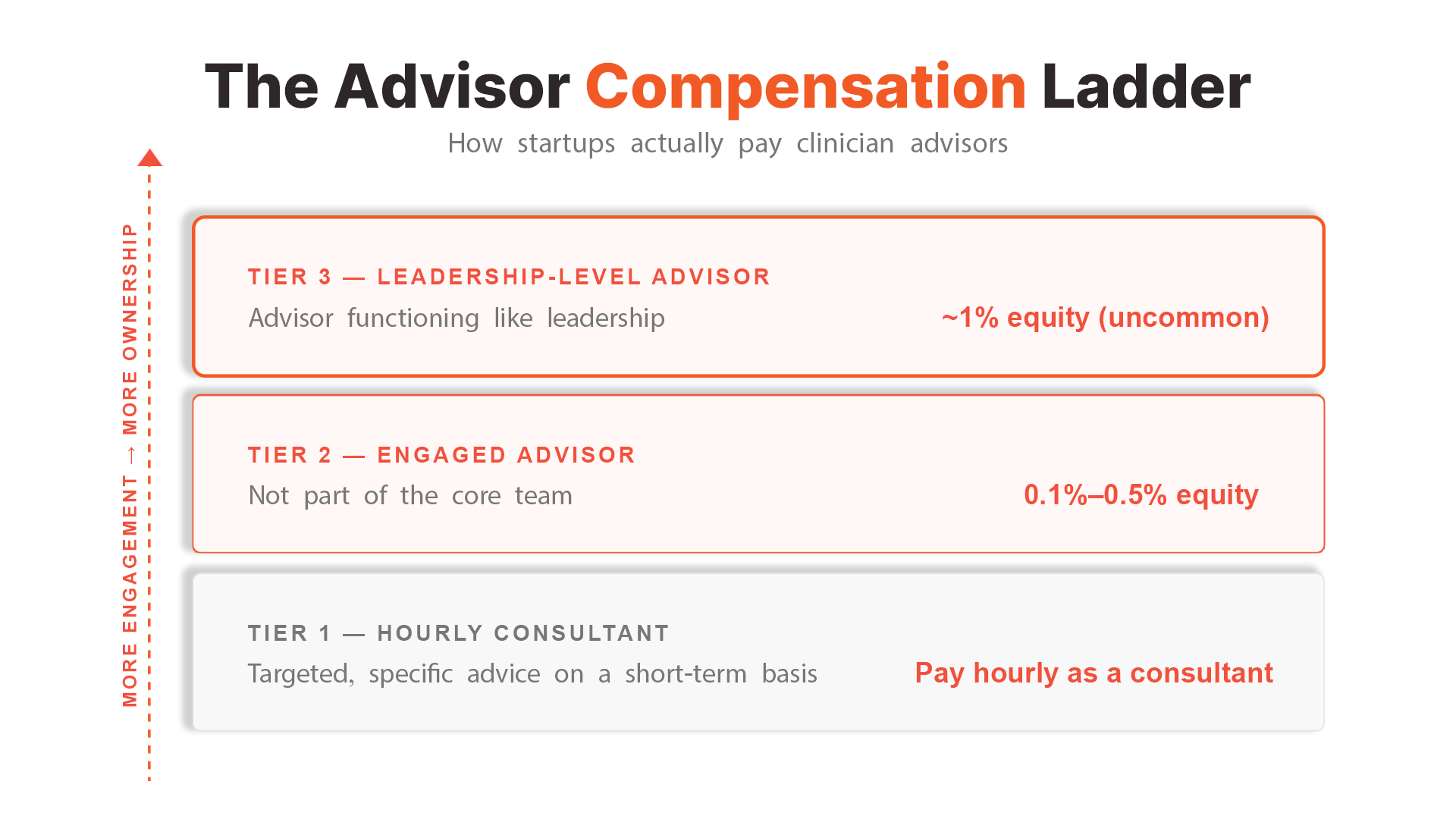
For its board, Jiro follows that model. The company compensates some advisors with equity, others with a combination of equity and cash. The most engaged advisors may receive equity grants comparable to those of full-time employees.
"Being transparent about compensation is part of treating physicians like true partners," DiNorscio says.
There are tried-and-true strategies to reward clinician supporters, advisors and customers. Doximity famously brought in 10,000 physicians to participate in its IPO. While examples like that are still few and far between, founders at newer companies like Jiro told us they’re inspired by the model and are exploring similar incentive structures to reward their most engaged users over time.
 Christina Farr
Accountability beats meeting frequency
Most advisory boards meet at least quarterly. But frequency matters less than accountability. The most effective boards aren’t driven by vague requests for feedback. Advisors need specific projects, regular communication, clear expectations, and defined action items.
Feldman believes smaller, more frequent touch points often create greater engagement than infrequent formal meetings. Even then, not every advisory relationship succeeds. Advisors get busy. Expectations drift. Sometimes the fit simply isn't right.
When that happens, Aggarwal encourages founders to address the issue directly. "Putting it off just makes it harder for everyone."
The strongest advisory boards evolve alongside the company. Founders should regularly reassess the board’s composition, expectations, and goals, and be willing to make changes when necessary. Ultimately, the best clinician advisory boards are not collections of impressive names. They’re working groups that help companies build better products, avoid costly mistakes, and earn the trust of the people they’ll ultimately serve.
As more healthcare companies move physicians from advisors to co-builders, the strongest boards may prove to be one of the biggest competitive advantages companies can build into their organization.
|
Upcoming Sessions
Live conversations with the people shaping healthcare.

Verifying AI in Medicine: Is Healthcare AI Actually Ready for Deployment?
Is AI ready for real-world clinical care? Dr. Zak Kohane and Protege’s Engy Ziedan debate what it takes to safely trust AI in diagnosis and treatment, from benchmark performance and clinical evidence to whether we’re holding AI to a higher standard than humans.

Why Are Hospitals Hiring Chief AI Officers?
As AI moves from pilots into day-to-day healthcare operations, health systems are having to decide who should actually own the


Where are AI Agents Actually Working in Healthcare, and Why?
While the healthcare industry remains locked in a high-level debate over the theoretical potential of artificial intelligence, a select group of

Top Employers Share What Healthcare Startups Need to Know in 2026
As enterprise health purchasers face volatile medical cost trends and tightening operational margins, the standard vendor pitch of "improved clinical efficiency&

Peptide Therapy: Where Do We Go From Here?
Watch the full webinar Peptide therapies have moved from niche biohacking circles into mainstream medicine, reshaping conversations around weight management, metabolic health,

Not everyone can access the top 1% of physicians. Will AI change that?
Historically, top-tier medical expertise was limited by wealth and geography. As AI reshapes healthcare delivery, a vital question emerges: can it democratize intelligence to give everyone access to the caliber of care typically reserved for the top 1%?

Privacy AI and the Future of HIPAA
Watch the Full Webinar As AI reshapes healthcare and more patient data flows beyond traditional clinical settings, the rules governing privacy, access,

What will AI do for employer healthcare and benefits?
Employer healthcare may be one of the most practical — and overlooked — proving grounds for AI.

Hospitals as the new go-to-market, lessons from the trenches
Watch the Full Webinar Health systems are entering a new frontier, one where innovation isn’t optional, and meaningful change requires creativity,